The New Wave of Self-Driving Vehicles Driven by the AI Revolution: The Rebirth of Autonomous Technology in 2026
The arrival of foundation models and end-to-end artificial intelligence has reduced the cost of developing autonomous vehicles, disrupting multi-billion dollar traditional monopolies.
The race to build autonomous vehicles worldwide has once again gained unprecedented momentum. Between 2016 and 2019, the self-driving car sector saw a major surge, but the enthusiasm subsequently cooled due to the complexities of the technology and indiscriminate spending of billions of dollars. Now, modern artificial intelligence models have transformed the landscape of this entire sector.
According to a recent report by Trucks Venture Capital, an organization specializing in early-stage investments, 81 new autonomous vehicle startups have been founded so far in 2026. This figure is significantly higher than any single full year since the company's inception in 2015, and there are still two months left in the year. This growth indicates that we have entered a second and more powerful wave of self-driving technology.
Failures and Consolidation of the First Wave
In the first phase of autonomous vehicles, companies such as Gatik, May Mobility, Skyryse, Motional, and Bear Flag Robotics were launched. However, around 2020, the limitations of the technology began to emerge. Building these vehicles required an army of hundreds of engineers, billions of dollars in capital, precise data on countless driving scenarios, and months of time to retrain models whenever sensors were changed.
As a result, after 2020, there was large-scale consolidation of companies. For example, Uber ATG merged into Aurora, Zoox was acquired by Amazon, Argo shut down, and Cruise was brought back under the control of GM. At that time, it became a common belief that building self-driving cars was a task only for massive companies like Waymo or Tesla and that small startups would not be able to survive in the field.

AI 2.0: Foundation Models and New Architecture
From 2024, a revolutionary change began to take place in this entire sector. The arrival of foundation models (core AI models pre-trained on vast data) and large language models changed the way autonomous vehicles are built. Previously, separate complex codes had to be written for sensors, mapping, and control for cars, whereas now the entire system can operate on an end-to-end architecture.
In a conversation with TechCrunch, Puneet Meruva, a partner at Trucks VC, explained that the industry had been attempting to transition from AV 1.0 to AV 2.0 for quite some time. Modern foundation models can automatically understand new situations and environments, allowing for rapid adaptation. Open-source models such as Nvidia's Alpamayo and Qwen's vision-language-action models (which interpret visual scenes, understand language, and make vehicle control decisions) have opened the doors to this technology for smaller developers.
- Multi-sensor data acquisitionContinuous visual and distance-based recording of the vehicle's surrounding environment via cameras, LiDAR, and radar.
- Vision-Language-Action processingFoundation models like Nvidia Alpamayo or Qwen simultaneously analyze road conditions, signs, and obstacles.
- End-to-end decision and controlInstead of separate subsystems, a single neural network immediately executes steering, acceleration, and braking decisions.
Levels of Autonomy and Operational Design Domain
To determine the capabilities of autonomous vehicles, a zero-to-five level classification system has been established by the global organization SAE International. Level 0 signifies complete human control, while Level 5 represents a vehicle that drives itself without human intervention in any situation or on any road. However, as of the end of 2025, no system in the world has achieved full Level 5 autonomy across all domains.
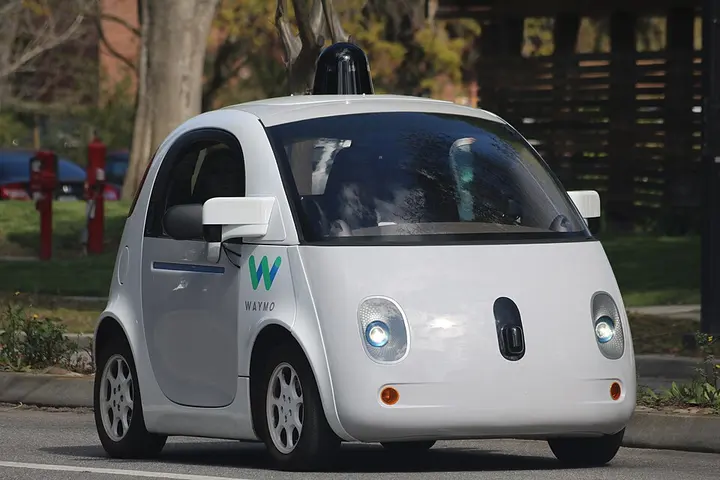
For any self-driving system, the Operational Design Domain (ODD: the parameters within which a vehicle can operate safely, such as specific geographic areas, weather conditions, or speed limits) is of the utmost importance. For example, Waymo has launched Level 4 robotaxi services in specific urban areas like Phoenix and San Francisco. On the other hand, although Tesla's Full Self-Driving (FSD) is available in all regions, it remains only a Level 2 assistance system, in which the driver must maintain constant attention.
માઇલ
Mercedes-Benz offered a Level 3 service for highway traffic at speeds of up to 64 km/h, but in January 2026, the company removed that feature to focus on new Level 2 capabilities. GM's hands-free Super Cruise technology operates on specific roads, and the company has announced plans to increase its coverage from 400,000 miles to 750,000 miles (approximately 1,210,000 km).
| Company / System | SAE Level | Operational Design Domain (ODD) | Driver's role |
|---|---|---|---|
| Waymo One | Level 4 | Specific cities (e.g., Phoenix, San Francisco) | No driver required |
| Tesla FSD | Level 2 | All common roads | Hands on steering and continuous monitoring required |
| GM Super Cruise | Level 2 | Map-based compatible highways | Hands-free, but eyes must be kept on the road |
| Ford BlueCruise | Level 2 | Divided highways (1,30,000 miles) | Hands-free, driver attention required |
Low-cost Startups and the New Robotaxi Competition
Foundation models have completely transformed the economics of building autonomous vehicles. Where previously millions of dollars were required for initial testing, startups are now deploying their systems in just a few months with funding of less than 1 million dollars. Among the proposals received by Trucks VC, many startups are not limited merely to construction, agriculture, or mining, but are preparing to compete directly in the robotaxi sector with companies like Waymo.
Analysts believe that while small startups may not be able to compete directly on a global scale, they can serve specific regions or designated routes with great success. In the year 2022, no one was willing to believe that a small startup could build an autonomous vehicle, but by 2026, open-source AI models have broken down all barriers to entry.

Global deals, manufacturing, and challenges
Large financial transactions have also recently been recorded in this sector. For hardware and industrial technology, the company Re:Build has raised a massive $2.1 billion in funding. Autonomous vehicle technology startup Bedrock Robotics has secured an investment of $600 million, valuing the company at $4.1 billion. Additionally, the company Kodiak AI will supply 75 self-driving trucks to DTL Transport for highway operation starting in 2028.
In the manufacturing sector, an important partnership has been formed between Waymo and Toyota. In Japan, Toyota will produce bZ4X vehicles equipped with Waymo's system in its factories, which will be used as robotaxis in countries like Japan and the UK. This partnership will pave the way for bringing autonomous technology to privately owned cars in the future.
However, amidst this technological development, public perception and safety remain major challenges. In a 2021 global survey, only 27% of the world's population admitted to feeling safe in a self-driving car. Accidents caused by unpredictable circumstances and weather uncertainties on public roads remain a subject of concern for regulators. Nevertheless, in today's era of AI, autonomous driving is becoming faster, more widespread, and economically affordable.