The Mystery of Cosmic Creation: How a 'Forgotten' Neutrino Particle Saved Us from Nothingness
Scientists have discovered a heavy neutrino particle that may have played a pivotal role in establishing the balance between matter and antimatter after the Big Bang.

Our very existence is a great mystery. According to the fundamental principles of physics, when the universe began, matter and its opposite, antimatter, should have been produced in equal amounts. The problem is that when matter and antimatter come into contact, they annihilate each other, leaving behind only pure energy. If both had been equal at the beginning, there would be nothing like stars, planets, or life in the universe today; there would only be empty space and light. But we are here, which means that somehow matter won. Recently, researchers from the University of Southampton and the Indian Institute of Technology (IIT) Kanpur have presented a surprising solution to this puzzle, the focal point of which is a 'forgotten' neutrino particle.
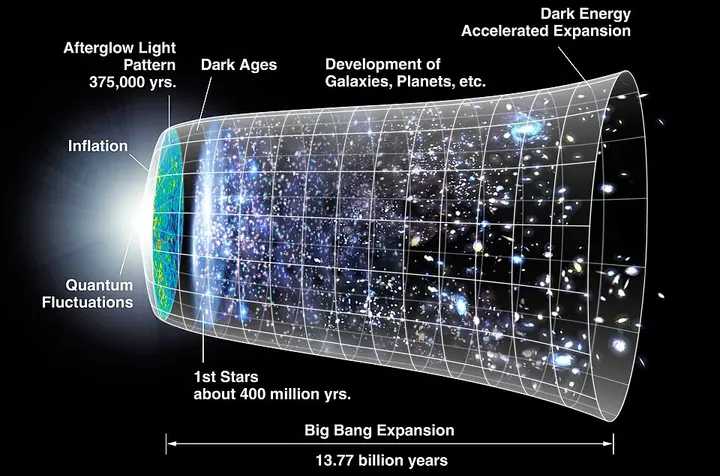
Neutrinos are among the most mysterious particles in nature. They are so light that for a long time scientists believed they had no mass at all. They are electrically neutral and rarely interact with ordinary matter. In fact, even now, billions of neutrinos are passing through your fingertips every second, but you do not even feel them. To understand these particles, we must go back to the time of the Big Bang, the great explosion of the universe. According to the Big Bang theory, about 13.787 billion years ago, the universe began to expand from an extremely hot and dense state. During this process, many types of particles were created, including neutrinos.
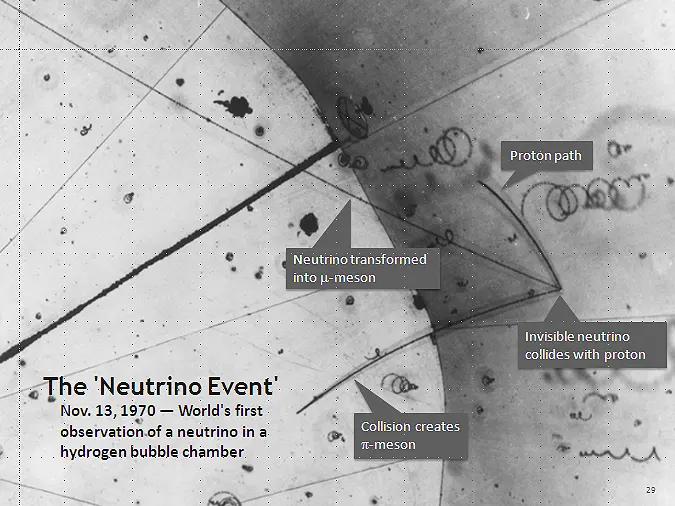
The history of the neutrino is also interesting. In 1930, Wolfgang Pauli hypothesized this particle to explain the conservation of energy during beta decay, or the disintegration of an atom. Later, Enrico Fermi named it 'neutrino', which in Italian means 'little neutral one'. Its first experimental confirmation was made by Clyde Cowan and Frederick Reines in 1956. Scientists know that neutrinos come in three types or 'flavors': electron neutrino, muon neutrino, and tau neutrino. These particles constantly change from one flavor to another, which is called neutrino oscillation. The Nobel Prize was also awarded for this discovery in 2015.
- OriginDecoupled heavy neutrinos are produced in the extremely hot environment after the Big Bang.
- Energy dominanceSince these particles have a long lifespan, they survive even as the universe cools and dominate the energy density.
- Temperature changeThey change the rate at which the universe cools, which affects interactions with the Higgs boson.
- Triumph of matterDue to this process, there is a slight increase in the amount of matter over antimatter, which lays the foundation for today's universe.
However, the particle that scientists from Southampton and IIT Kanpur are talking about is not this ordinary neutrino. It is called a 'decoupled heavy neutrino'. This is a hypothetical heavy particle that scientists had previously ignored, considering it unimportant. According to the researchers, this particle is so weakly coupled with other particles that it is difficult to detect. However, this weak interaction became its greatest strength. Due to its weak connectivity, it has a very long lifespan. According to a report published in the journal Physical Review Letters, this particle survived for so long after the Big Bang that it temporarily dominated the energy density of the universe.
Dr. Rishav Roshan, an author of this study, explains that as the universe was cooling down, these heavy neutrinos created a period where matter was dominant. This process changed the temperature of the universe. This temperature change acts like a switch, determining how electrons and other lepton particles interact with their antiparticles. A particle called the Higgs boson also plays an important role in this process. The Higgs boson is the particle that gives mass to other fundamental particles. The heavy neutrinos helped create an imbalance between matter and antimatter by altering the timing of interactions with the Higgs boson.
| Type of neutrino | Associated lepton | Year of discovery |
|---|---|---|
| Electron neutrino | Electron | 1956 |
| Muon neutrino | Muon | 1962 |
| Tau neutrino | Tau | 2000 |
In scientific language, this imbalance is called baryon asymmetry. Shortly after the Big Bang, due to unknown reactions, one extra particle of matter remained for every 30 million particles. While the rest of the matter and antimatter were annihilating each other, this tiny excess remained, from which the entire visible universe has been formed. According to co-author Dr. Sudipta Show of IIT Kanpur, this 'forgotten' particle dramatically changed the history of the universe's expansion.
This theory is not just on paper; there is also a way to prove it. Scientists believe that the dominance of these heavy neutrinos must have generated gravitational waves in the early stages of the universe. Gravitational waves are ripples in the fabric of space and time. If we can detect these ancient waves, we may find evidence of the presence of these neutrinos within them. These waves provide information about a time in the universe when even light could not travel freely.
Observing the distribution of matter in the current universe, ordinary matter accounts for only about 5%. The remaining 27% is dark matter and 68% is dark energy. Neutrinos may also help in solving the mystery of this dark matter. Countless neutrinos also reach Earth from the nuclear fusion process occurring at the center of the Sun. Approximately 65 billion solar neutrinos pass through every square centimeter of the Earth's surface every second. These particles are so minute that they can pierce through the entire Earth without any obstruction.

This research is also a matter of pride for India because scientists from IIT Kanpur have made a significant contribution to solving this global mystery. If this theory proves to be correct, it will add a new chapter to the Standard Model of physics. The Standard Model is the framework that explains all known particles and forces of the universe, but it has not yet been able to explain why matter exceeded antimatter. These heavy neutrinos are perhaps the missing link responsible for bringing us into existence from nothingness.