Imaging the Invisible: How the First Black Hole Image Was Captured Using an Earth-Sized Virtual Telescope
From the mathematics of Albert Einstein's relativity to the coordination of observatories across the globe, the scientific achievement behind capturing the first real image of a black hole.
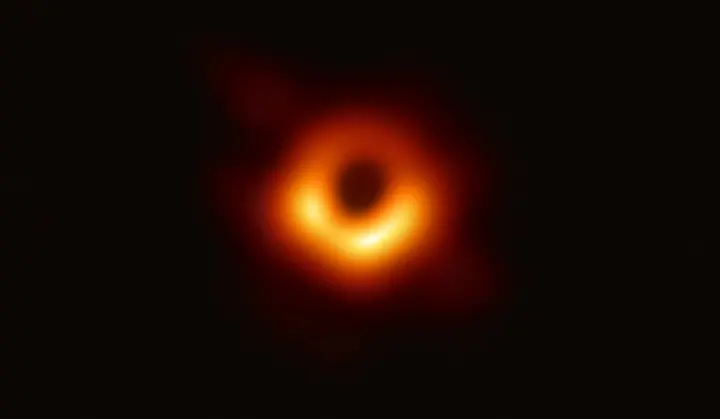
April 10, 2019, has been etched in golden letters in the history of world astronomy and physics. For decades, a celestial object that existed only in the complex equations of mathematicians and the papers of theoretical physics was presented to humanity in its first real image. This object is a black hole—a structure in space with such immense gravity that not even a single ray of light can escape its grip. When no light can emerge from an object, how to photograph it was the biggest question in the scientific world.
This seemingly impossible task was made possible by senior astrophysicist Shep Doeleman of Harvard University and his team of 250 fellow researchers. They created an extremely large virtual network called the 'Event Horizon Telescope' (EHT) by connecting radio telescopes spread across different continents on Earth. With the help of this global instrument, an image was captured of the supermassive black hole at the center of the Messier 87 (M87) galaxy, located approximately 55 million light-years away from Earth.
From imagination to mathematics: The theoretical history of black holes
The idea of a black hole is older than the theory of relativity. In 1784, a calculation was presented in a paper by English astronomer John Michell, stating that if a star had the same density as the Sun but a radius 500 times larger, the escape velocity from its surface would exceed the speed of light. Consequently, no light could emerge from it. A similar concept was independently presented by French scientist Pierre-Simon Laplace in 1796.
In modern physics, this subject received a strong foundation in 1915, when Albert Einstein introduced General Relativity. According to this theory, gravity is not a traditional force, but a curvature in the fabric of spacetime caused by mass. Within months of Einstein's equations being published, the first precise solution was found by German physicist Karl Schwarzschild, who was fighting on the front lines of the First World War. He demonstrated that if a specific mass were to compress into an infinitesimal boundary, the equations of time and space would become infinite there. This boundary was later named the Schwarzschild radius.
In the early decades, legendary scientists like Albert Einstein and Arthur Eddington believed that such a completely collapsing object was impossible in physical reality. In 1931, Indian scientist Subrahmanyan Chandrasekhar demonstrated that the gravitational collapse of stars with mass exceeding a certain limit cannot be stopped by electron pressure. Subsequently, in 1939, J. Robert Oppenheimer and George Volkoff determined the maximum limit for neutron stars, which is known as the TOV limit. In the same year, Oppenheimer and Hartland Snyder showed that the gravitational collapse of a massive star pushes it within its Schwarzschild radius.
In 1958, this boundary was termed the 'event horizon' by David Finkelstein. He described it as a 'unidirectional membrane' into which any event can enter, but the effect of any event occurring inside cannot reach the outside world. In 1963, a precise mathematical solution for a rotating black hole was discovered by Roy Kerr. However, despite all these theoretical findings, direct observation of a black hole remained to be achieved.
From the death of stars to the hearts of galaxies
In astronomy, there are mainly two types of black holes. The first type is stellar-mass black holes, which are formed by the collapse of the inner core after a supernova explosion at the end of the lives of stars ten to twenty times larger than the Sun. There could be millions of such black holes in our galaxy. Cygnus X-1, identified between 1971 and 1974, was one such X-ray binary source, which became the first strong black hole candidate accepted by humanity.
The second type is supermassive black holes. These gargantuan black holes possess masses equivalent to millions or billions of Suns and reside at the center of almost every large galaxy. At the center of our own galaxy, the Milky Way, there is also a supermassive black hole named Sagittarius A*, which has a mass of approximately 4.3 million Suns. Scientists observed massive jets being ejected from the centers of galaxies at the speed of light via radio waves, which is only possible through spinning supermassive black holes.
| Year | Scientist / Researcher | Theoretical discovery |
|---|---|---|
| 1784 | John Michell | First calculation that light cannot escape from a star with a radius 500 times that of the Sun |
| 1915 | Albert Einstein | General Relativity: Gravity is the curvature of space-time |
| 1916 | Karl Schwarzschild | First precise solution to Einstein's equations (Schwarzschild radius) |
| 1939 | Oppenheimer and Snyder | Mathematical model of a star collapsing due to gravity |
| 1958 | David Finkelstein | Defined the event horizon as a unidirectional membrane |
A camera as big as the Earth: The Event Horizon Telescope
Even though supermassive black holes are extremely vast, given their immense distance from Earth, their angular size in the sky appears extremely small. According to Shep Doeleman, observing the black hole in the M87 galaxy from Earth is equivalent to taking a picture of an apple sitting on the surface of the Moon. To achieve such ultra-fine resolution, optical telescopes are not sufficient; it requires a telescope with a mirror as wide as the diameter of the Earth.
Since it is impossible to build a telescope physically as large as the Earth, scientists used the Very Long Baseline Interferometry (VLBI) method. Powerful radio telescopes installed in Hawaii, Arizona, Spain, Chile, Mexico, and the South Pole (Antarctica) were linked together. In this method, the entire Earth acts as a massive virtual telescope.
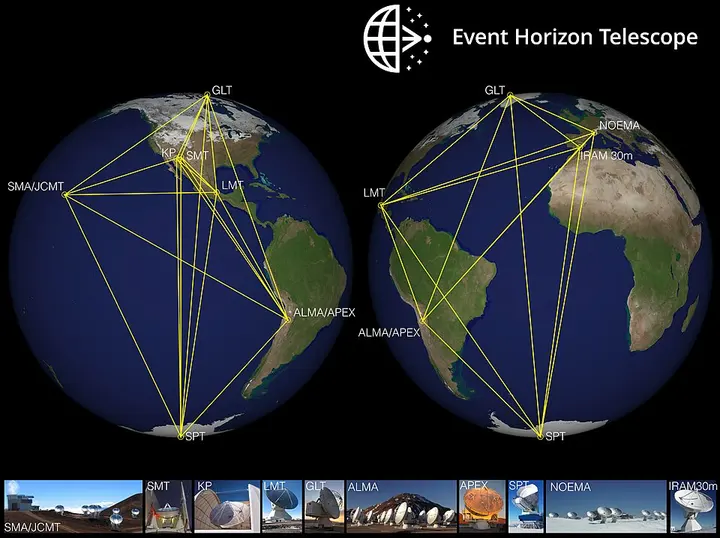
This process was extremely complex. Each telescope was focused on that specific point in the sky at millimeter wavelengths. The entire dataset was synchronized at the nanosecond level with the help of atomic clocks. The telescopes collected such a vast amount of data that it was impossible to transfer it via the internet; therefore, the hard drives were transported directly to supercomputers by airplane.
- NetworkingA virtual telescope the size of the Earth was created by connecting radio telescopes from around the world.
- SynchronizationAll data was accurately synchronized at the nanosecond level with the help of atomic clocks.
- Data transferMassive data was stored on hard drives and transported to supercomputer centers by airplane.
- Image processingThe first picture of a black hole was created from this data using complex algorithms.
A Ring of Light and the Shadow of Infinity: What is visible in the image?
When the results were revealed in April 2019, the whole world saw a bright orange ring and a dark void in the middle. A common person might ask: if a black hole is black, what is this bright ring? In reality, a black hole pulls surrounding gas and matter toward itself due to its immense gravity. This matter forms a circular disk around the black hole, which is called an accretion disk.
Due to extreme friction and pressure, this gas heats up to hundreds of billions of degrees and emits intense light. According to Einstein's General Theory of Relativity, gravity bends the path of light, a phenomenon known as gravitational lensing. Light from behind the black hole also bends due to its gravity and reaches us, creating a complete bright ring. The dark area visible in the center is actually the 'shadow' of the black hole, which appears about two and a half times larger than the event horizon.
| Object / Source | Type | Mass / Distance | Historical significance |
|---|---|---|---|
| Cygnus X-1 | Stellar-mass | Ten times the mass of the Sun | First accepted black hole with evidence in 1971-1974 |
| Sagittarius A* | Supermassive | Approximately 4.3 million solar masses | Located at the center of our Milky Way galaxy |
| Messier 87 (M87*) | Supermassive | 55 million light-years away from Earth | First direct image taken by the Event Horizon Telescope |
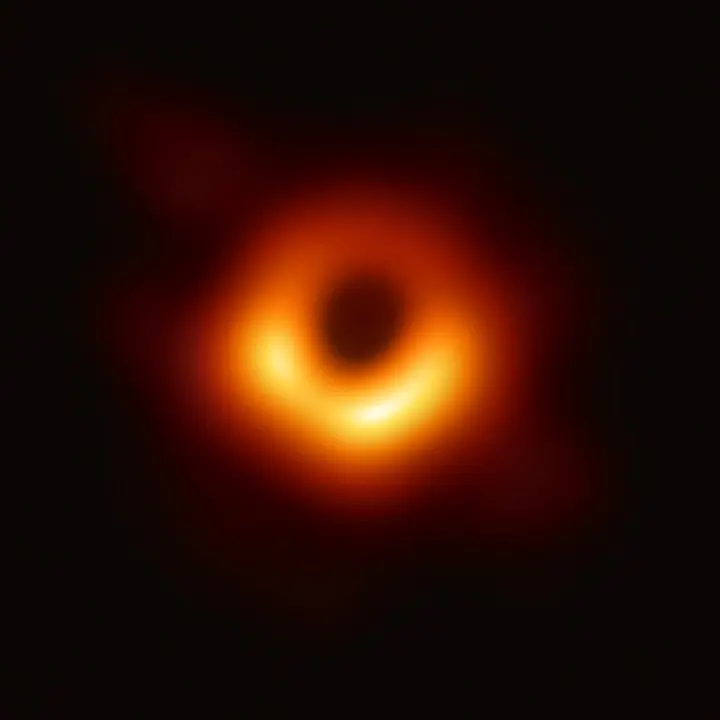
In this image, the lower part of the bright ring appears brighter, demonstrating the Doppler beaming effect. This indicates that the material in the accretion disk is rotating toward us at extreme speeds. Later, scientists also obtained an image of this same black hole in polarized light, which revealed the structure of the powerful magnetic fields at the edge of the black hole.

From a Still Image to the Cinema of Black Holes
This work of the Event Horizon Telescope was not limited to just taking a picture. It tested Einstein's General Theory of Relativity in the most extreme environment of the universe and proved it to be one hundred percent correct. If there had been even the slightest flaw in General Relativity, the shape of this shadow would not have remained circular but would have been distorted.
According to a conversation between Shep Doeleman and Quanta Magazine, astronomy is now entering its next phase. Scientists are adding more new observatories to the telescope network in the coming period. As per Doeleman, by the early 2030s, scientists will be able to record not just static photographs of black holes, but also real-time videos (movies) of the matter orbiting them and the jets being emitted. This darkest corner of the universe, which existed only in imagination centuries ago, is now becoming an open book of science thanks to human intelligence and technology.