A 4.1 Billion-Year-Old History of Mars Found in the Sahara: The Scientific Mystery of the Tighza 001 Meteorite
Scientists have analyzed a pink stone discovered in the Sahara Desert, revealing startling details about the early Martian crust and the presence of water on the planet.
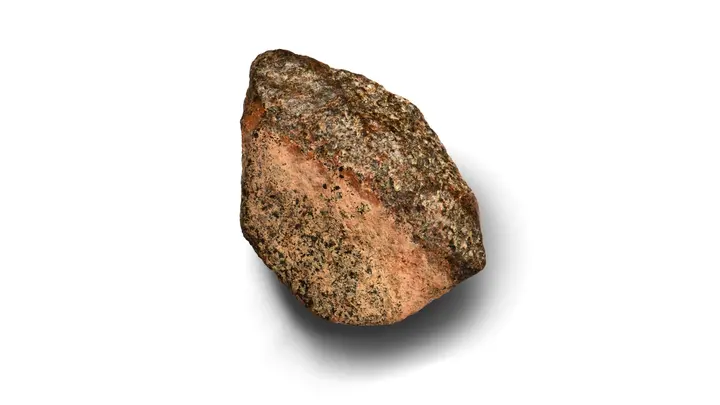
When a unique pink stone was discovered in the vast Sahara Desert in 2022, no one suspected that this stone was not from Earth, but a piece of the Red Planet, Mars, located millions of kilometers away. A recent study funded by NASA has revealed that this stone, named 'Teghaza 001', is one of the oldest Martian meteorites. Weighing approximately 800 grams, this rock was formed on Mars 4.1 billion years ago. Found in the salt flats of Mali, this stone has opened closed doors to Mars' past for scientists. So far, approximately 435 Martian meteorites have been found on Earth, but Teghaza 001 is considered extremely unique due to its age and chemical composition.
According to research published in the journal Science, Teghaza 001 provides a rare glimpse into the early crust of Mars and its formation. Studying this stone will help in understanding the interactions that occurred between water and rocks on ancient Mars in the future. According to lead author Yang Liu of NASA's Jet Propulsion Laboratory (JPL), when this meteorite was closely examined, it was realized that it is truly unique. One reviewer even called this stone the 'Rosetta Stone' for Mars, meaning it is a key that will help unlock the mysteries of the planet. The composition of this stone and the igneous, or volcanic, minerals it contains set it apart from all other meteorites.
The history of meteorites reaching Earth from Mars is quite fascinating. When a massive asteroid strikes the surface of Mars, the impact is so powerful that Martian rocks are ejected into space. These fragments travel through space for millions of years and eventually land here due to Earth's gravity. Scientists confirm these stones are from Mars by comparing them with data collected by NASA's Viking landers and the Curiosity or Perseverance rovers. In the case of Teghaza 001, it was identified as a Martian stone based on oxygen isotopes, which are different atomic forms of oxygen.
Scientists have used highly advanced methods to determine the age of this meteorite. Researchers discovered zircon crystals within it. Zircon is a mineral that preserves the signatures of rock formation, and geologists use it to determine the precise age of a sample. A team led by co-author François Tissot of Caltech used a new method called 'in-situ rubidium-strontium' dating. Typically, an entire sample is dissolved to determine the age of a rock, but in this method, a piece smaller than a fingernail was used to analyze individual mineral grains on its surface. This kept the sample intact and yielded highly accurate results.
- Asteroid impactA large asteroid hits the surface of Mars at high velocity.
- Ejection into spaceThe energy of the impact causes Martian rocks to exceed escape velocity and be thrown into space.
- Interplanetary travelThese rocks orbit the solar system for millions of years.
- Arrival on EarthUpon entering Earth's gravitational field, they enter the atmosphere and fall to the ground as meteorites.
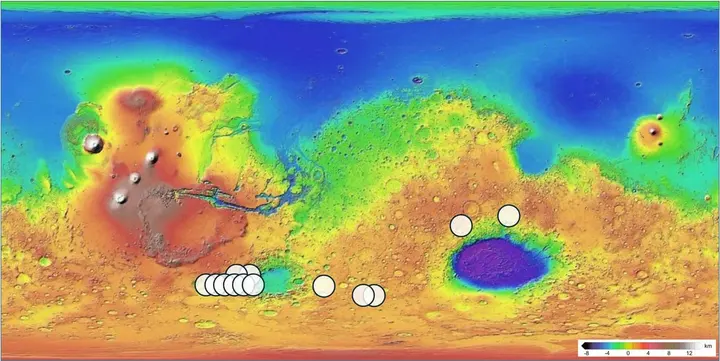
The study found that the minerals contained in Tanezrouft 001 match a cratered region on Mars known as the southern highlands. The mineral composition and chemistry of this stone are consistent with observations taken from space by NASA's Mars Reconnaissance Orbiter. Although it is not known exactly where on Mars this stone was ejected from, researchers have identified several potential locations on the Martian map from which this stone could have originated. This stone is a part of the Martian crust for which scientists have never had a sample before.
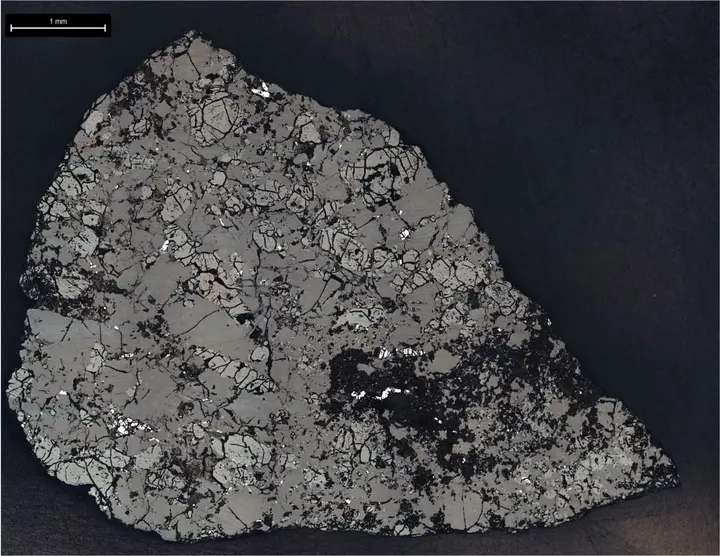
The most important aspect of this research is the presence of water on Mars. Analysis of Tanezrouft 001 revealed that this rock was altered by Martian water approximately 4.1 billion years ago. This means that it must be even older than that originally. The oxygen isotopes within the rock and its composition suggest that the water cycle on early Mars was extremely dynamic. Another paper published in June provided detailed information about the traces of water in this meteorite, showing how water shaped the surface of the Red Planet.
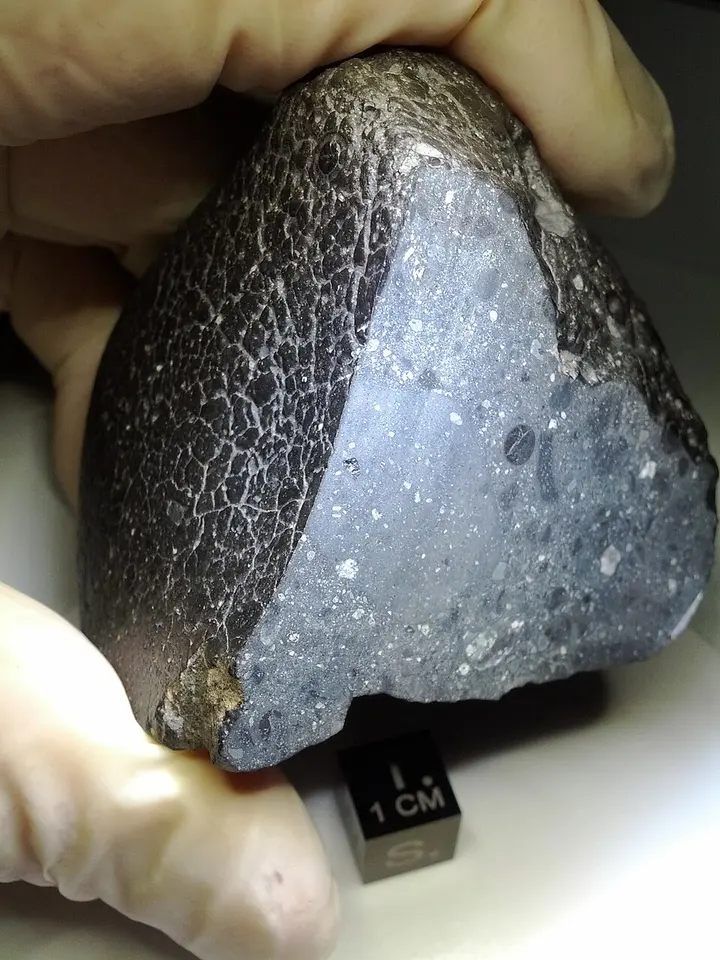
When Tanezrouft 001 is compared with other famous Martian meteorites, its uniqueness becomes even clearer. For example, the NWA 7034 meteorite, known as 'Black Beauty', is approximately 2.1 billion years old and contains small fragments of volcanic rocks. Another well-known meteorite is ALH84001, which is as old as Tanezrouft 001, but it is primarily composed of a single mineral. In comparison, Tanezrouft 001 contains a mixture of various types of igneous minerals, which tells the entire story of the formation of the Martian crust. It shows how magma, or molten rock, cooled down and subsequently underwent changes due to interaction with groundwater.
| Meteorite name | Estimated age | Main characteristic |
|---|---|---|
| Teghaza 001 | 4.1 billion years | Mixture of various igneous minerals |
| Black Beauty (NWA 7034) | 2.1 billion years | Fragments of volcanic rocks |
| ALH84001 | 4.1 billion years | Mainly a single mineral |
Most Martian meteorites belong to the 'shergottite' class, which are relatively young, dating between 180 million and 600 million years old. The name shergottite is derived from the village of Sherghati in Bihar, India, where the first such stone was found in 1865. Tissint 001 is quite different and more ancient than this common class. Scientists believe that this stone may also preserve evidence of the Martian atmosphere from the time when Mars was losing its water. This discovery is not just about a single stone, but is a window into understanding the evolutionary history of the entire planet.
As more research is conducted on this meteorite in the future, more accurate information about the possibilities of life on Mars and its environment will be obtained. NASA and other space agencies are currently working on the 'Mars Sample Return' mission to bring samples directly from Mars to Earth, but until then, meteorites that have arrived on Earth naturally, like Tissint 001, remain our only means of learning the secrets of Mars. Yang Liu and his team believe that this is just the beginning and that this 'pink stone' will reveal many more mysteries.