The New Backbone of the Power Grid: Technology and Future of Large-Scale Battery Storage Systems
Amidst the growing proliferation of solar and wind energy, Battery Energy Storage Systems (BESS) are becoming indispensable for grid stability. An in-depth analysis of their operational mechanics, declining costs, and global transformation.
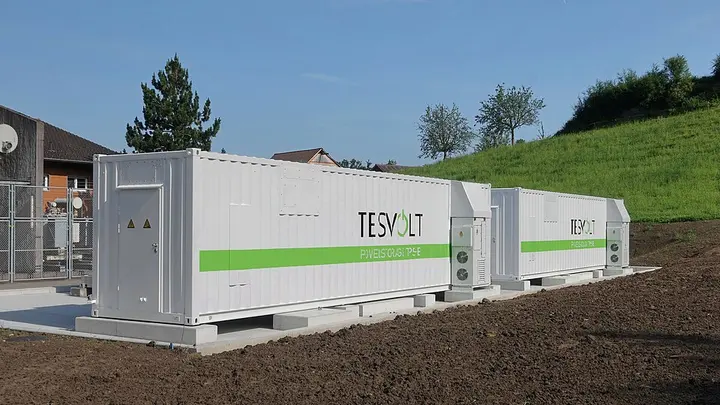
Across the world, there is a race to adopt renewable energy sources like solar and wind by reducing fossil fuel-based power generation. However, the biggest question remains how to keep grid electricity stable after the sun sets or the wind slows down. Emerging as the fastest and most practical solution to this puzzle is the Battery Energy Storage System (BESS). What we generally refer to as a power grid battery is not just a collection of batteries, but a sophisticated electrochemical system capable of handling fluctuations in power supply in a hundredth of a second.
According to the Volta Foundation's 2025 global report, a massive increase of 104 gigawatts (GW) and 257 gigawatt-hours (GWh) in grid battery installations was recorded in a single year. Interestingly, 40% of the total global BESS capacity installed to date was added in the year 2025 alone. The main reason behind this unprecedented speed is the sharp 31% annual decline in costs. For countries like India, where electricity demand skyrockets during peak hours, such grid-scale batteries are proving to be the backbone of the energy transition.
What is a grid battery and how is it structured?
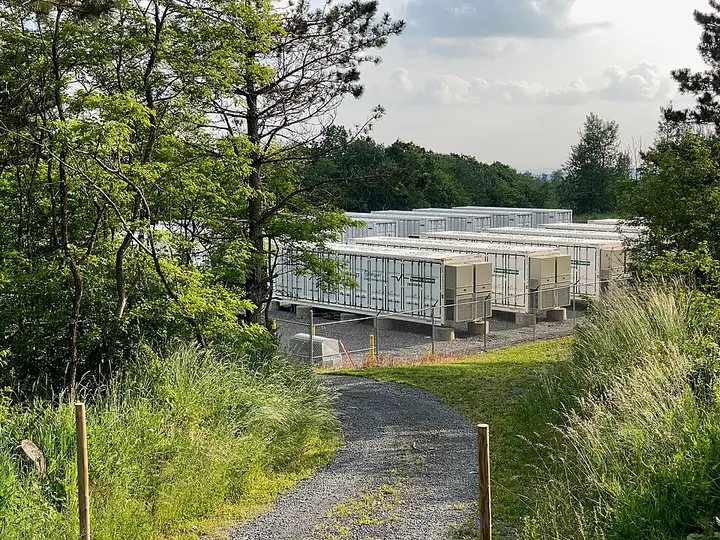
Grid-scale battery storage is a system that stores electrical energy on a massive scale, which can immediately send electricity to the grid during emergencies or peak demand times. These plants operate on the same principle as uninterruptible power supplies (UPS), but their size and capacity are vast. For safety reasons, the cells and packs are arranged in special warehouses or sturdy shipping containers.
Batteries that store energy through chemical processes always produce direct current (DC), whereas our transmission networks operate on alternating current (AC). Therefore, battery plants are equipped with large power inverters and power electronics equipment like gate turn-off thyristors, which coordinate with high-voltage direct current (HVDC) transmission to connect to the grid.
These plants are many times more flexible than traditional power stations. They do not require the transportation of fuel, have no tall chimneys, and do not need massive cooling systems. For these reasons, they can be installed in a very short time in urban areas, near consumer load centers, or on the land of old, decommissioned power plants.
The chemistry inside: How does lithium-ion work?
The most widely used technology in modern BESS stations is the lithium-ion battery. The foundation for this battery was laid in the 1970s by M. Stanley Whittingham, which John Goodenough advanced in 1980 with a lithium cobalt oxide cathode. Subsequently, in 1985, Akira Yoshino created a carbon-based anode to develop the modern prototype, which was brought to market by Sony in 1991. These three scientists were awarded the Nobel Prize in Chemistry in 2019.
The fundamental process of a lithium-ion cell is based on intercalation, which is the insertion and extraction of ions between atomic layers. Typically, the cell contains graphite as the negative electrode (anode) and a lithium compound as the positive electrode (cathode). When the battery is charged, the application of external power causes lithium ions to exit the cathode, flow through a lithium hexafluorophosphate electrolyte dissolved in organic carbonate, and arrange themselves between the layers of graphite.
During discharge, this process is reversed; the graphite anode oxidizes and releases lithium ions that travel through the electrolyte toward the cathode, while the released electrons flow through an external circuit to create an electric current. Because lithium ions constantly oscillate between the two electrodes, it is also called a 'rocking-chair' battery. Energy is obtained from the product of cell voltage and charge. Every one gram of lithium represents approximately 13,901 coulombs of charge, which provides 11.6 kWh of energy per kilogram at 3 volts.
- Charging phaseUpon receiving external electric current, lithium ions are released from the cathode, travel through the electrolyte to the anode (graphite), and get stored there.
- Energy storage (intercalation)Lithium ions settle between the graphite layers of the anode as chemical potential energy, and electrons are stored via an external circuit.
- Discharging phaseWhen the grid needs power, the anode oxidizes, sending lithium ions back to the cathode, and electrons flow through the external circuit.
- Grid supply and inversionDirect Current (DC) power from the battery is converted to Alternating Current (AC) by an inverter and flows into the grid in 10 milliseconds.
Evolution of Technology: From Lead-Acid to LFP and Sodium-Ion
In the 1980s, lead-acid batteries were primarily used in battery storage plants. One such system, which became operational in 1997, provided a 1.6 MW peak and 1.0 MW continuous output. However, lead-acid batteries have low energy density, and because hydrogen gas is released during overcharging, it was necessary to constantly add water and maintain ventilation to avoid the risk of explosion. Subsequently, systems such as nickel-cadmium and sodium-sulfur were introduced.
After 2010, with the development of electric vehicles, lithium-ion batteries came to dominate grid storage. Specifically, by the year 2024, lithium iron phosphate (LiFePO4 - LFP) chemistry became the mainstay in utility storage. LFP does not use expensive and conflict-ridden cobalt, its raw materials are easily available, it has a long lifespan, and it is thermally very safe. The LFP system installed at the Paiyun Lodge on Taiwan's Mount Jade since 2016 has been operating continuously without any safety incidents.
Sodium-ion batteries are also advancing rapidly as an alternative to lithium shortages and high water consumption. The operating mechanism of sodium-ion cells is similar to lithium, but they use sodium ions instead of lithium. Their energy density is slightly lower, but the cost is lower and safety is excellent. In 2024, a 50 MW / 100 MWh sodium-ion BESS was launched in China's Hubei province. In 2026, the company CATL introduced the modular TENER sodium system, which offers 30 MWh of storage capacity and can provide power supply for 1 to 8 hours. Additionally, for long-term storage, a 4-hour vanadium redox flow battery plant with a capacity of 175 MW / 700 MWh also became operational in 2024.
USD/MWh
Grid stability and exceptional response speed
Traditional coal or gas-based power plants take hours or minutes to reach full capacity from a shutdown state, whereas battery storage takes less than a second to reach full power from standby mode. Due to the absence of mechanical movement, the start time of a BESS can be as fast as 10 milliseconds (ms). This speed is a boon for maintaining grid frequency control and voltage regulation.
When a discrepancy arises between electricity demand and supply, frequency oscillations are created in the grid. If such waves, which last up to 30 seconds, are not controlled, they can cause blackouts across large regions. BESS keeps the grid stable by instantly absorbing these fluctuations. Generally, battery systems are designed to provide full-capacity power for 1 to 4 hours, which is sufficient to handle evening peak demand (peak shaving). Since 2019, battery storage has proven to be cheaper than open-cycle gas turbines for power usage of up to 2 hours.

Falling costs and vast global statistics
Due to the scale of technology and increased production capacity, the Levelized Cost of Storage (LCOS) has decreased at an extraordinary rate. In the decade between 2014 and 2024, the cost of storage has halved every 4.1 years. In 2020, the cost of battery storage was 150 US dollars per MWh, which decreased to 117 dollars per MWh by 2023. In 2025, the average global system price reached approximately 120 dollars per kWh, with the cell component accounting for 30% to 40%.
Following this rapid price decline, global grid battery power capacity reached 267 GW and energy storage capacity reached 610 GWh by the year 2025. According to the International Hydropower Association, the global capacity of traditional pumped-storage hydroelectricity was 200 GW of power and 9,000 GWh of energy storage. Thus, in terms of power distribution capacity, battery storage has surpassed pumped-storage, although hydro storage remains ahead in total energy volume.
Comparing countries, China is at the forefront in the BESS sector. By May 2025, China's cumulative BESS capacity had reached 106.9 GW and 240.3 GWh (which was 62 GW / 141 GWh at the end of 2024). On the other hand, the United States installed 12.3 GW / 37.1 GWh in the year 2024 and 57.6 GWh in the year 2025, where domestic production capacity has reached 70 GWh. By the year 2026, battery portfolios have also become established as a new asset class for institutional investors in this sector.
| Battery type | Key feature | Limitation / Challenge | Recent use |
|---|---|---|---|
| Lithium Iron Phosphate (LFP) | High safety, long life, easy availability of components | Lower energy density than cobalt-based cells | Global dominance in utility-scale BESS |
| Sodium-ion | Low cost, high temperature tolerance, abundant raw materials | Lower energy density than lithium | Hubei project (50 MW / 100 MWh), CATL TENER |
| Vanadium Redox Flow | Long-duration storage (4 hours or more) | Large physical size and complex pumping system | 175 MW / 700 MWh plant in year 2024 |
| Lead-acid | Low initial cost, high surge current | Low energy density, hydrogen gas risk | Small budget and older projects |
Safety, Battery Lifespan, and Future Challenges
The biggest technical challenges facing large-scale battery systems are cycle ageing and thermal runaway. Frequent charging and discharging, especially at high charging rates and excessive depth of discharge, degrades the internal structure of the cell. This reduces capacity, causes voltage drops, and can generate excessive heat. If temperatures become uncontrolled, the flammable organic electrolyte of lithium-ion batteries can lead to fire or explosion.
Incidents such as fires at 23 battery farms in South Korea between 2017 and 2019, a fire in a Tesla Megapack at Geelong in Australia, a battery module explosion in Arizona, and a cooling liquid short circuit at the Moss Landing LG battery facility have forced the industry to improve safety standards. Despite these incidents, the failure rate has decreased significantly as technology has improved. Most failures occur in control systems, while only 11% of faults have been observed in cells. By the year 2025, the failure rate has dropped to just 0.04 incidents per GWh.

Although there have been attempts in countries like the United States to halt projects due to local fears of fire, research into solid-state batteries and non-flammable sodium-ion chemistry is addressing these concerns. In the context of India, where solar capacity is growing rapidly but there is pressure on the grid, such 1 to 4-hour lithium and sodium BESS systems will replace coal-based peaking plants and ensure the uninterrupted distribution of clean energy.