Can Einstein's original equations explain the expansion of the universe without dark energy?
Researchers at UC Davis have challenged the necessity of dark energy based on Einstein's field equations, sparking a new debate on the Standard Model of physics.

The Mystery of the Universe and Questions Raised Against Dark Energy
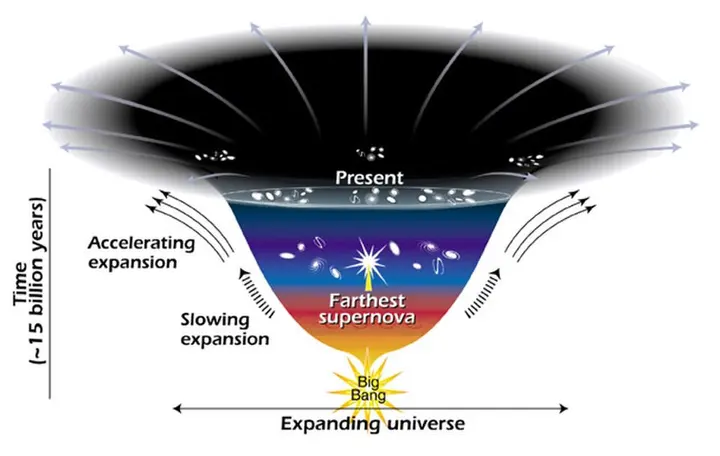
The greatest puzzle currently facing modern astronomy and cosmology is why our universe is expanding at an ever-increasing rate. Back in 1998, observations of Type Ia supernovae revealed to scientists that the expansion of the universe is accelerating rather than slowing down. To explain this unexpected activity, scientists hypothesized an invisible energy called 'dark energy.' This energy is believed to be uniformly distributed throughout space and acts against gravity to push space outward.
However, researchers at the University of California, Davis (UC Davis) have now posed a serious theoretical challenge to this established belief. The researchers state that by using Albert Einstein's fundamental equations of gravity, it is possible to explain the expansion of the universe without the need for dark energy. They have examined the weaknesses in the prevailing Lambda-Cold Dark Matter (Lambda-CDM) model of cosmology through Einstein's field equations. The researchers have shown that a deep investigation into the instabilities within the mathematical framework of Friedmann opens up a new path.
The Mathematics and Structure of Einstein's Field Equations
To understand this entire concept, it is essential to understand the equations of Einstein's General Theory of Relativity. Published in 1915, the Einstein Field Equations (EFE) link the geometric structure of space and time with the distribution of matter and energy within it. Just as Maxwell's equations connect the electromagnetic field with electric charge and current, Einstein's mathematics determines the curvature of spacetime based on mass-energy.
These equations are written in mathematical form as tensors (a mathematical tool representing geometric quantities). Their standard form is $G_{\mu\nu} + \Lambda g_{\mu\nu} = \kappa T_{\mu\nu}$. Here, the left side represents the geometry of spacetime, while the right side represents the amount of energy-matter contained within spacetime. This equation clarifies that matter tells spacetime how to curve, and curved spacetime tells matter how to move.
- Distribution of matter and energyThe density and pressure of stars, gases, and radiation in space are calculated via the stress-energy tensor.
- Curvature in the geometry of spacetimeThe presence of this mass and energy curves the surrounding fabric of spacetime, described by the Einstein tensor and metric tensor.
- Formation of the gravitational fieldCurved spacetime determines the geodesic path for freely moving particles and light rays.
- Dynamic expansion of the universeAt the scale of the entire universe, these equations determine the overall rate of contraction or expansion of space.
In this equation, $G_{\mu\nu}$ is the Einstein tensor, which represents the local curvature of spacetime. It is defined by the Ricci curvature tensor ($R_{\mu\nu}$) and the scalar curvature ($R$). On the other hand, $g_{\mu\nu}$ is the metric tensor (a tool for measuring distance and time in space). The $T_{\mu\nu}$ on the right side of the equation is the stress-energy tensor, which stores information about mass, energy, momentum, and pressure. This equation is not just a simple line, but in reality, a complex nonlinear set of ten partial differential equations.
| Symbol | Name | Mathematical role |
|---|---|---|
| G_μν | Einstein tensor | Represents the local geometric curvature of spacetime |
| g_μν | Metric tensor | Determines the measurement of distance and time in spacetime |
| Λ | Cosmological constant | Energy density of the vacuum or global repulsion |
| T_μν | Stress-energy tensor | Represents the distribution of matter, energy, momentum, and pressure |
| κ | Einstein gravitational constant | Value equal to 8πG/c⁴ (~2.07665 × 10⁻⁴³ N⁻¹) |
The Proportion of Matter and Dark Energy in the Universe
According to mainstream astronomy today, three components play a major role in the composition of the universe. Per the Lambda-CDM model, dark energy accounts for approximately 68% of the observable universe today. Cold dark matter accounts for 27%, while ordinary matter—the baryonic matter comprising the stars, planets, and gases we are familiar with—accounts for only 5%. The share of other particles like neutrinos and photons is considered negligible.
Dark energy is spread throughout space in an extremely diffuse form. Its density is infinitesimally small, at only 7 × 10⁻³⁰ grams per cubic centimeter. However, despite such low density, because it is spread uniformly throughout the entire universe, it dominates the total energy budget. While the proportion of ordinary matter becomes thinner as volume increases, the density of dark energy does not decrease with the expansion of space.
Cosmological Constant: Einstein's Greatest Blunder or Foresight?
The Greek letter Lambda (Λ) in Einstein's equation is known as the cosmological constant. When he presented his equations in 1915, the common belief was that the universe was static. Since gravity pulls everything inward, Einstein artificially added this constant to the equation to prevent the universe from collapsing, thereby maintaining a balance of gravity. Einstein stated that empty space could act like negative mass and create repulsion against gravity.
But it was later realized that this stability could not last for long. If the universe were to expand even slightly, the amount of vacuum energy would increase, inducing even faster expansion. In 1929, an astronomer named Edwin Hubble provided evidence that galaxies are moving away from each other and that the universe is not static but expanding. Upon learning this, Einstein abandoned the idea of the cosmological constant, calling it the greatest blunder of his life.
The 1998 Revolution and the Rise of the Standard Model
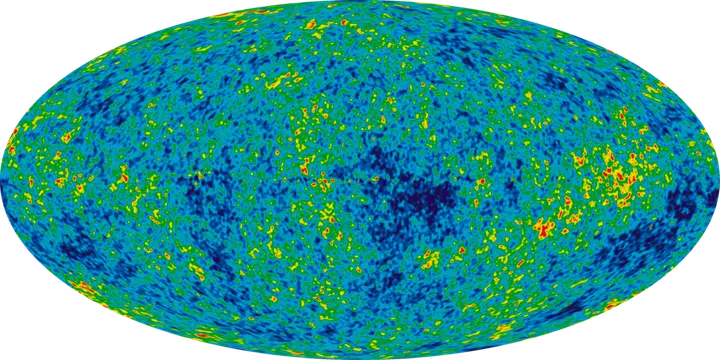
In the 1980s, most physicists believed that the universe consisted of 95% dark matter and 5% ordinary matter. However, after the discovery of irregularities in the Cosmic Microwave Background (CMB) by the COBE spacecraft in 1992, cracks began to appear in this old model. In 1998, teams led by Adam Riess and Saul Perlmutter proved through supernova observations that the expansion was accelerating rather than slowing down. That same year, cosmologist Michael S. Turner coined the term 'dark energy'.
To explain these results, scientists once again turned to Einstein’s old constant, Λ. According to general relativity, the pressure of matter also contributes to gravity. If a medium possesses immense negative pressure, it creates an effect akin to gravitational repulsion. Vacuum energy can generate such negative pressure. However, there is a vast discrepancy between the vacuum energy calculated via quantum field theory and actual observations, which is considered an unsolved problem in physics.
A New Direction in UC Davis Research
As a solution to these unresolved problems, researchers at UC Davis have presented a new path. Their argument is that the Lambda-CDM model we use to understand the universe assumes the universe is perfectly uniform and homogeneous. But in the real universe, there are galaxies and vast voids. Since Einstein’s equations are nonlinear, small-scale instabilities can affect the expansion rate on a large scale.
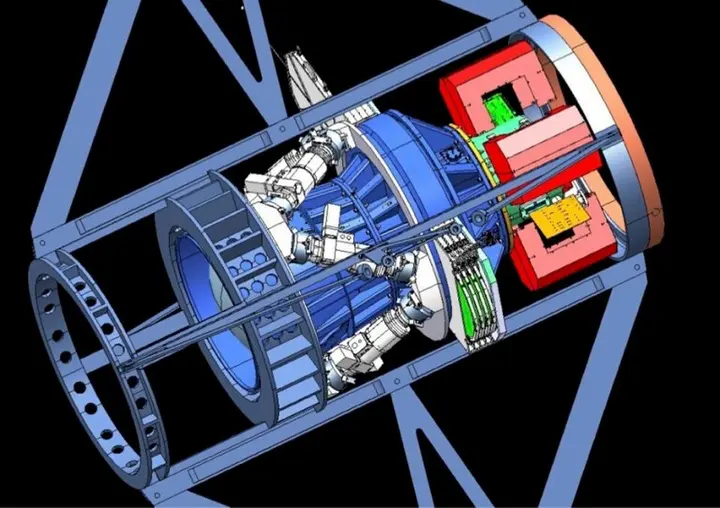
If the instabilities inherent in Einstein’s original equations and local distortions of spacetime are what create the illusion of accelerated expansion, then we do not need to postulate a mysterious 68% dark energy. In March 2025, an analysis by the Dark Energy Spectroscopic Instrument (DESI) also indicated that dark energy might be changing over time. If future mathematical and telescopic evidence confirms this alternative from UC Davis, modern cosmology will have to redefine its greatest mystery.