Gene Scissors CRISPR: A New Scientific Hope for Sickle Cell Patients
A detailed scientific explanation of how the CRISPR-Cas9 technology, evolved from bacteria's natural defense system, is revolutionizing the treatment of fatal genetic blood disorders.
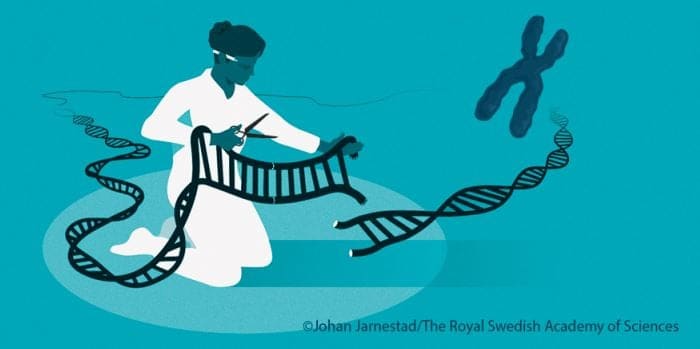
A tiny flaw hidden within the DNA (DNA: Deoxyribonucleic Acid, the genetic blueprint of life) nestled inside the billions of cells of the human body can sometimes cause unbearable pain for generations. Sickle Cell Disease (Sickle Cell Disease: a genetic blood disorder where red blood cells become sickle-shaped) is one such hereditary disease that consigns millions of patients worldwide to a lifetime of severe physical agony and organ damage. In the year 2023, medical science achieved a historic milestone when a CRISPR-based gene therapy (gene therapy) was officially approved to correct the defective gene in bone marrow (bone marrow: tissue inside bones that produces blood cells) stem cells. The mechanism behind this therapy is commonly known as 'genetic scissors'.
The roots of this revolutionary method are tied to the 2020 Nobel Prize in Chemistry, which was jointly awarded to French scientist Emmanuelle Charpentier and American scientist Jennifer A. Doudna. According to the Nobel Committee, the method developed by these two scientists for genome editing (genome editing: a technique to make precise changes in the genetic makeup of an organism) is proving to be immensely beneficial for humankind. The technology that is correcting flaws in human DNA today is actually a defensive system that has existed naturally in microscopic bacteria for millions of years to fight against viruses.
Sickle Cell Disease: The Distorted Form of Blood Cells and Its Danger
The protein named hemoglobin present in our red blood cells (red blood cells: blood cells that transport oxygen) performs the crucial function of delivering oxygen from the lungs to the entire body. In a normal adult, over 97% of the hemoglobin is of the 'Hemoglobin A' (HbA) type, which is composed of two alpha and two beta globin chains. The HBB gene located on chromosome 11 (chromosome 11) of the human body provides the instructions to make this beta-globin protein. Sickle Cell Disease occurs when a person inherits damaged copies of this HBB gene from both their mother and father.

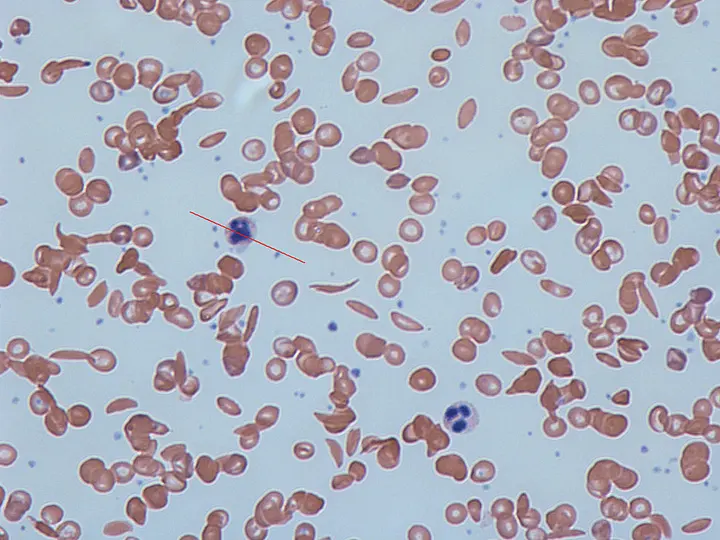
Due to this genetic mutation, abnormal 'Hemoglobin S' (HbS) is produced in the body instead of normal hemoglobin. When these abnormal red blood cells release oxygen in blood vessels, the molecules bind together to form rigid fibers, causing the normally round and flexible red blood cells to transform into a hard, sickle-like shape. These stiff sickle cells cannot easily pass through extremely narrow blood vessels (capillaries) and get stuck there, obstructing blood flow. This condition is called a 'vaso-occlusive crisis' (vaso-occlusive crisis: a painful attack caused by blocked blood flow), which causes the patient to suffer unbearable pain in the bones, back, chest, and limbs.
This disease does not remain limited to pain; it causes permanent damage to vital organs of the body such as the spleen, liver, kidneys, heart, and lungs. In children, blockage of the spleen reduces immunity, and blockage in the lungs causes 'acute chest syndrome', which is responsible for 25% of the deaths in these patients. According to data from the year 2021, sickle cell disease affects approximately 7.7 million people worldwide, directly causing 34,000 patient deaths and acting as a secondary cause in another 376,000 deaths. About 80% of these cases are found in sub-Saharan Africa, but the prevalence of this disease is also significant in regions of India, southern Europe, and western Asia.
The Discovery of CRISPR from Bacterial Defense Systems
In the world of science, the history of CRISPR (Clustered Regularly Interspaced Short Palindromic Repeats) is filled with unexpected findings. First, in 1987, Japanese scientist Ishino and his team observed this strange repetitive DNA sequence in Escherichia coli bacteria. Normally, such sequences in DNA are continuous, but here unknown DNA fragments (spacers) were arranged at regular intervals between them. In 1993, van Solingen and colleagues noted a similar structure in tuberculosis bacteria, leading to the development of a method called 'spoligotyping'.
Spanish scientist Francisco Mojica conducted extensive research in 2000 and 2001, concluding that this architecture is uniformly present in about 20 microorganisms, and together with Jansen, he named this structure 'CRISPR'. In 2005, three independent research groups noted that the 'spacers' residing between these two repeats are actually DNA fragments of bacteriophages (viruses that infect bacteria) that had previously attacked the bacteria. By preserving the DNA of the viruses that attack them, bacteria acquire an adaptive immunity based on memory against future attacks. This natural defense system is found in approximately 50% of sequenced bacteria and 90% of archaea.
How Molecular Scissors Work: Step-by-Step Method
The CRISPR system is not merely a storage of DNA, but also possesses specialized enzymes associated with it, called Cas (CRISPR-associated proteins). Scientists have identified a total of 93 Cas genes divided into 35 families, of which 11 families from Cas1 to Cas9 are considered the main core. When a virus attacks, Cas1 and Cas2 proteins cut a small piece from the virus's DNA and integrate it as a new spacer into the bacteria's CRISPR array. Subsequently, crRNA (CRISPR RNA) is formed from this entire sequence.
| Component Name | Normal Size (bp) | Full Range (bp) |
|---|---|---|
| CRISPR Repeats | 28 to 37 | 23 to 55 |
| Spacer Sequences | 32 to 38 | 21 to 72 |
| Number of units per array | Less than 50 | Not applicable |
In the year 2012, the team of Emmanuelle Charpentier and Jennifer A. Doudna proved that the Cas9 protein of the bacterium Streptococcus pyogenes acts like a molecular scissors. They created a single guide RNA (sgRNA) by joining two distinct RNA components (crRNA and tracrRNA). This single guide RNA directs the Cas9 enzyme to a precise target location on the DNA. These scissors are not activated until a specific recognition signal (PAM: Protospacer Adjacent Motif) is found on the DNA, but as soon as the target is found, they cut both strands of the DNA at a precise site.
- 1. Target IdentificationSingle guide RNA (sgRNA) accurately identifies the defective or specific gene sequence on the DNA.
- 2. Cas9 Binding and PAM ScanningCas9 enzyme binds with guide RNA and checks for the PAM sequence on the target DNA.
- 3. DNA CleavageUpon finding the specific location, the Cas9 enzyme cuts both strands of the DNA, creating a double-strand break (DSB).
- 4. Cellular RepairThe cell repairs this cut using its natural DNA repair mechanism, which allows the gene to be corrected or inactivated.
When a double-strand break is thus made in the cellular DNA, the cell activates its natural repair mechanism. During this repair, the defective gene can be inactivated, or the error in the DNA can be corrected by inserting a new gene sequence as required by the patient. This technology was used experimentally in human cell cultures by Cong and Mali in 2013 and in human embryonic cells by Liang in 2015.
Treatment and Current Status for Sickle Cell Patients
Traditional treatment for sickle cell disease includes pain relievers, blood transfusions, and medications like hydroxyurea. Without proper medical care, patients rarely reach adulthood, whereas even with optimal care, their average life expectancy remains 58 to 66 years. However, CRISPR technology has crossed the limitations of this lifelong management, opening the path to a permanent cure.

In this novel gene therapy, blood-forming stem cells are extracted from the patient's own bone marrow. In the laboratory, the DNA of these cells is modified with the help of CRISPR-Cas9 scissors so that the body begins to produce 'Hemoglobin F' (HbF: the natural protective hemoglobin formed during gestation) once again. These modified cells are then transplanted back into the patient's body. This prevents red blood cells from transforming into a rigid, sickle-like shape and enables the patient to achieve permanent relief from painful crises.
With approximately 7.7 million people worldwide living with sickle cell disease, this technology is not merely a scientific miracle, but a new lease on life for patients. In countries like India, where the proportion of people carrying the sickle cell trait is quite high among tribal and rural populations, such therapeutic methods could bring about a major transformation in public health in the future. However, since this treatment depends on highly complex laboratories and advanced hospital infrastructure such as bone marrow transplantation, making it reasonably accessible to ordinary citizens will remain the biggest practical goal for global health organizations in the times ahead.