Global Science Collaboration with Horizon Europe: New Horizons in Research Between India and Europe
Association with the European Union's 95.5 billion euro flagship research program Horizon Europe has opened new doors for Indian scientists to collaborate at the international level.
A New Chapter in Scientific Horizons
Amidst the rapid global changes taking place in the fields of science and advanced technology, the relationship between India and the European Union has reached a critical juncture. Horizon Europe, the European Union's most ambitious seven-year scientific program, has become the world's largest hub for research and innovation. This program is not limited to Europe alone, but provides a framework to bring together leading countries from around the world. India's Ministry of Science and Technology and its premier institutions are actively engaging with this platform for international collaboration.
This initiative is much greater than a mere scientific exchange. As the world struggles today against challenges like climate change, incurable diseases such as cancer, sustainable energy, and biodiversity threats, no single country can solve these challenges alone. This is precisely why international collaboration has become a strategic imperative. Becoming an associated country in Horizon Europe or participating in specific projects gives Indian scientists direct access to Europe's advanced laboratories and resources.
The Structure and Budget of Horizon Europe
Horizon Europe is the European Union's 9th Research and Technological Development Framework Program (FP9), which has replaced Horizon 2020 (FP8) that ran from 2014 to 2020. This program has been implemented for a seven-year period from 2021 to 2027. The European Commission's original plan was to increase science spending by nearly 50 percent compared to the previous decade, so that Europe could equip itself against future challenges.
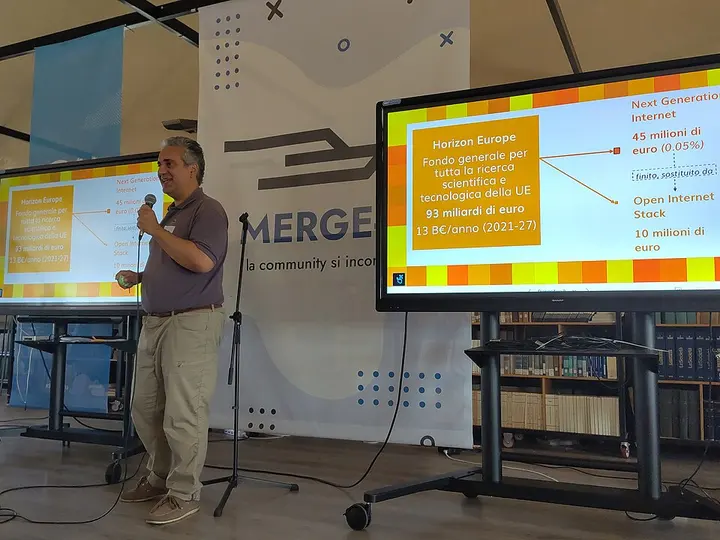
Talking about financial figures, the total budget of this program has been set at €95.5 billion, which is significantly higher than the €77 billion budget of its predecessor Horizon 2020. When the proposal for Horizon Europe was tabled in May 2018, a total expenditure proposal of €100 billion was put forward. Out of that, €2.4 billion was set aside for the Euratom nuclear research program and €3.6 billion for an investment fund named InvestEU. Taking into account an annual inflation of 2 percent, this funding amounted to €86.6 billion according to 2018 prices.
અબજ યુરો
To provide this funding, the European Commission proposed a 5 percent cut in the budgets for agriculture and regional development. However, this process was not easy. Then-Prime Minister Mark Rutte of the Netherlands deemed this draft budget unacceptable in May 2018. European Commissioner Carlos Moedas implemented the idea of an American-style moonshot (an extremely daring and ambitious mission) to increase the science budget. After prolonged negotiations between the European Parliament and member states, an agreement was finally reached on a budget of €95.5 billion.
Five Major Missions and Global Goals
The entire operational framework of Horizon Europe is not limited to merely providing standard grants, but rather has defined five key missions by placing the five most serious challenges facing society at its core. All five of these missions are designed to achieve concrete results by the year 2030.
The first mission is Adaptation to Climate Change, under which the goal is to make at least 150 regions and communities resilient against climate change by 2030. The second mission is the fight against cancer, which, in coordination with Europe's Beating Cancer Plan, is working to improve the lives of over 3 million patients and develop timely screening and treatment methods by 2030. The third mission is the preservation of oceans and water sources, while the fourth mission is to create 100 smart and climate-neutral cities.
| Mission Area | Specific Target by 2030 |
|---|---|
| Climate Change Adaptation | Make at least 150 European regions climate-resilient |
| Cancer Control | Improve and save the lives of over 3 million patients |
| Oceans and Water Sources | Restoration of water resources and marine ecosystems |
| Smart and Climate-Neutral Cities | Prepare 100 fully carbon-neutral smart cities |
| Soil Deal for Europe | Establish 100 living labs leading to healthy soils |
The fifth mission is known as A Soil Deal for Europe, which aims to set up 100 living laboratories to prepare healthy soil. All of these missions are extremely relevant not only for Europe's geographical area, but also for a vast agricultural and coastal country like India.
Structure and Methodology of Collaborative Projects
Under Horizon Europe, research groups worldwide can obtain grants through various types of schemes. The management of these grants has been made simpler than before so that scientists' time is not wasted on paperwork. International researchers primarily work across four types of collaborative schemes.
- Joint Call and Topic SelectionThe European Commission announces grants for specific scientific fields under five key missions.
- Consortium FormationResearchers from member states and non-European countries come together to form a joint project team (consortium).
- Proposal and Funding ApprovalGrants are allocated under Research and Innovation Action (RIA) after quality check by independent experts.
- Technology and Data ExchangeShared distribution of laboratories, biotechnology, and industrial information during research.
The first type is Research and Innovation Action (RIA), whose main purpose is to acquire new knowledge and explore the possibilities of advanced technology. The second type is Innovation Action (IA), which is meant to bring research out of the laboratory and directly to the market. The third type is Coordination and Support Action (CSA), which establishes coordination among partner countries. The fourth type is Programme Co-fund Action (COFUND), in which public and private sectors jointly fund projects.
For non-European countries, association with Horizon Europe is possible in two ways. The first path is to become an Associated Member. Associated countries deposit a specific financial share into the programme's budget and, in return, their scientists and institutions get full rights and the opportunity to receive equal grants just like the member states of the European Union. Following the controversies after Brexit, Britain finally secured official association with Horizon Europe again starting from 1 January 2024.
| Project Type | Main Objective and Scope |
|---|---|
| Research and Innovation Action (RIA) | Gaining new knowledge and discovering innovative technologies or processes |
| Innovation Action (IA) | Bringing research closer to the market to develop new products or services |
| Coordination and Support Action (CSA) | Enhancing collaboration between research organizations and strengthening research infrastructure |
| Program Co-fund Action (COFUND) | Providing multi-annual joint funding in collaboration with public and private partners |
The second path is to participate as a non-associated third country. Researchers from countries in this category can work by joining the European consortium, but they do not directly receive European funding unless specific exceptional conditions are met. In these circumstances, the participating country's own science ministry provides co-funding to local scientists.
Indian Science Framework and Partnership Prospects
India's Ministry of Science and Technology is the apex mechanism for formulating and implementing policies for scientific research in the country. Three major departments operate under this ministry: the Department of Biotechnology (DBT), the Department of Scientific and Industrial Research (DSIR), and the Department of Science and Technology (DST). These departments manage the country's leading research infrastructure.
Renowned institutions such as the National Institute of Immunology, the National Centre for Cell Science, the Institute for Stem Cell Science and Regenerative Medicine, and the Translational Health Science and Technology Institute operate under the Department of Biotechnology. Similarly, dozens of laboratories of the Council of Scientific and Industrial Research (CSIR) fall under DSIR. Under the Department of Science and Technology (DST), the Indian Institute of Science (IISc), the Indian Institutes of Science Education and Research (IISERs), and the recently established National Research Foundation are providing leadership in the field of research.
India is already conducting joint research through bilateral forums such as the Indo-French Centre for the Promotion of Advanced Research (IFCPAR) with France, the Indo-German Science and Technology Centre (IGSTC) with Germany, and the Indo-US Science & Technology Forum (IUSSTF) with the United States. However, associating with Horizon Europe provides India with a unique opportunity to work on an integrated platform with the finest scientific minds of all of Europe, rather than isolated agreements with individual countries. In the fields of biomanufacturing, data systems biology, climate adaptation, and clean energy, Indian researchers are advancing joint research with European groups.

Controversies and Future Challenges
Like any major international program, Horizon Europe is not free from controversies. The European Union treaties have an explicit provision that this funding cannot be used for military purposes. Nevertheless, an in-depth study conducted in 2024 by Statewatch and Informationsstelle Militarisierung (IMI) revealed a shocking fact. According to this report, millions of euros in Horizon funding were used to develop military drone technology that was used against civilians in Gaza. Due to such revelations, human rights groups have raised serious questions about the program's monitoring process.
In addition, the European Union is linking research funding to the rule of law and the independence of the judiciary in its member states as well. For a vast democratic country like India, participation in Horizon Europe makes it necessary to maintain a geopolitical balance. Clear guidelines regarding the sharing of Intellectual Property Rights (IPR), data sovereignty, and the patenting of research outcomes are essential.
India's association with Horizon Europe is an initiative that will take our participation in the global knowledge economy to new heights. As long as an environment of transparent rules and mutual respect is maintained, this partnership will serve as a medium for creating an innovative revolution for scientists in both India and Europe.