Dark GPUs: The Enigmatic Truth of Unutilized Processing Capacity in Datacenters Amid the AI Boom
Despite a global chip shortage for developing artificial intelligence models, numerous GPUs in multi-billion-dollar datacenters fail to operate at full capacity.
In the modern era of artificial intelligence (AI), silicon chips are the most valuable asset. Technology companies around the world are spending billions of dollars to acquire state-of-the-art GPUs, but a hidden and serious problem is taking shape behind this, which technology experts are calling 'dark GPUs'. According to a report by Business Standard, a Graphics Processing Unit (GPU) is a specialized computer chip specially designed to perform multiple complex calculations simultaneously.
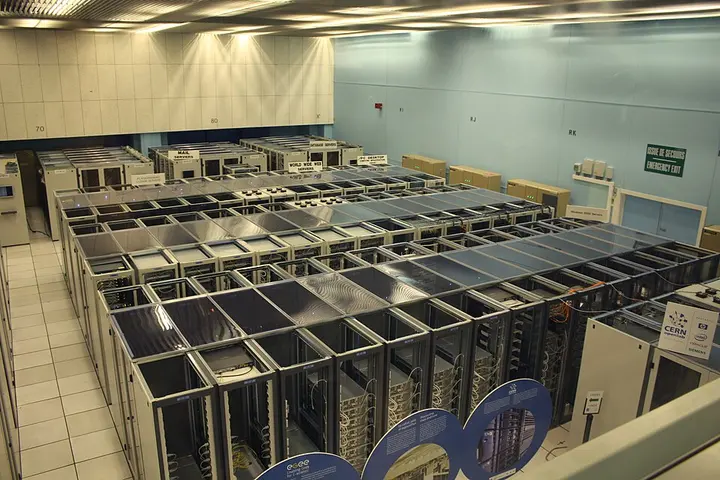
A dark GPU refers to a situation where, despite having state-of-the-art processors worth millions of dollars installed in data centers, they cannot work at their full capacity or remain in an idle state for most of the time. This phenomenon is not just a financial waste, but is also slowing down the pace of AI development globally. When there is a severe shortage of processing power in the world, having thousands of processors lying in server racks without sufficient capacity utilization is the biggest paradox of today's computing world.
Architecture of GPUs and their necessity for AI
Looking at the history of computing, a general processor, i.e., a CPU (Central Processing Unit), is built to perform complex calculations sequentially. In contrast, the Graphics Processing Unit (GPU) emerged in the 1990s to accelerate digital image processing and computer graphics. A GPU contains hundreds or thousands of small calculation units, which have the ability to process massive amounts of data in parallel, i.e., through parallel processing.
According to Wikipedia details, after 2012, when GPUs began to be used to accelerate neural networks, an extraordinary revolution came about in the field of deep learning. Large Language Models (LLMs) and generative AI require a huge amount of linear algebra calculations. Since the architecture of a GPU is naturally suited for such parallel tasks, it has become the indispensable heart of supercomputing and artificial intelligence.
સિસ્ટમ્સ
Why 'Dark GPUs' are created: Helplessness despite having capacity
The problem of dark GPUs is not a single physical flaw, but the result of an unbalanced design of the entire system. When hundreds of GPUs are connected together in a supercomputer or cloud data center to train a massive model, it is necessary for each chip to remain continuously active. However, in practice, often the processing speed of the GPU is very high, while the memory or network delivering data to it cannot operate at that same speed.
This situation is called a memory bottleneck, in which the processor wastes precious milliseconds waiting for data. A dedicated GPU uses its own specialized memory (VRAM), but when the parameters of a complex model exceed this memory, the system chokes, which is technically known as choking. When one chip is waiting for data, other processors connected to it also stall, reducing the capacity of the entire cluster.
- Data distribution delayMemory bandwidth creates a bottleneck when large model data reaches the processor from main storage.
- Memory saturationData transfer chokes during complex calculations because the processor's own VRAM is limited.
- Synchronization bottleneckSome processors stall waiting for the results of other processors among thousands of parallel-connected GPUs.
- Dark or idle stateThe chip runs idle cycles without utilizing its full capacity despite consuming electricity.
Technical Statistics: Memory Bandwidth and Supercomputer Analysis
FLOPS (floating point operations per second) are generally used to measure processing capacity, and modern chips calculate in teraflops (TFLOPS). But FLOPS alone do not determine actual performance. A standard integrated GPU has a bandwidth of at most 128 gigabytes per second (GB/s) with system memory, whereas state-of-the-art dedicated graphics cards can provide a bandwidth of over 1000 gigabytes per second between their VRAM and cores.
According to the global TOP500 supercomputer list of June 2026, 276 leading supercomputers worldwide rely on accelerator or co-processor technology, a significant increase from the figure of 255 systems six months earlier. This data shows that 107 systems are equipped with NVIDIA Hopper chips, 62 systems use NVIDIA Ampere, and 32 systems rely on the AMD Instinct architecture. If GPUs are underutilized in such massive infrastructures, billions of watts of electricity and tens of millions of dollars are wasted.
| GPU Type | Memory Type | Maximum Bandwidth |
|---|---|---|
| Integrated GPU (IGPU) | Shared System RAM | Up to 128 GB/s |
| Dedicated GPU (Discrete) | Dedicated Video RAM (VRAM) | Over 1000 GB/s |

Energy Consumption, Cooling, and Infrastructure Crisis
Modern datacenters do not run on software alone; they require massive power supplies and cooling systems. State-of-the-art accelerator chips draw hundreds of watts of power and generate extreme heat. If a datacenter lacks the capacity to supply sufficient power to each rack or has limited cooling capacity, engineers are forced to shut down some chips or reduce their speed.
Due to this situation, silicon hardware remains 'in the dark'—meaning inefficient—even when physically present. Furthermore, large-scale industrial battery banks and backup systems must be deployed to prevent power supply disruptions. When hardware utilization drops to forty or fifty percent due to these infrastructural limitations, the return on investment is jeopardized.
Impact of This Phenomenon on the General Public and India
The problem of dark GPUs is not limited to remote data centers, but its impact ultimately reaches consumers. When AI infrastructure becomes inefficient, the cost of providing AI services increases, which keeps subscription fees high for users. For a developing nation like India, where local AI models and language-based computing are expanding, the full utilization of every available chip is extremely crucial.
If Indian institutions and startups can properly schedule GPU resources and correct the flaws of dark silicon through software optimization, optimal results can be achieved even with limited hardware. In the future, competition will not be won simply by purchasing powerful GPUs, but the entire AI revolution will depend on how accurately every single transistor of that hardware is utilized.