Dangerous Maneuvers by Russian Military Satellites in Space: A New Threat Looming Over Commercial Satellites
There are concerns that Russia's military satellites are practicing attacks by moving extremely close to Western commercial satellites, raising serious questions for space security.

Space is no longer just a center for research; it appears to be becoming a new theater of war. An incident that occurred in mid-October 2026 has caused alarm among global security experts. It has emerged that a Russian military satellite, Cosmos 2612, performed dangerous maneuvers by approaching extremely close to a commercial satellite belonging to Western nations. Military experts are expressing concerns that this event was not merely an accident, but could be a rehearsal or preparation for an attack in space.
According to a report by The Japan Times, U.S. Under Secretary of State Thomas DiNanno expressed serious concern regarding this matter on social media. He stated that this Russian satellite was intentionally moving extremely close to the commercial satellite, which constitutes 'on-orbit weapons operations.' The satellite that was targeted is named X36, operated by the Finnish company ICEYE. This company provides radar imagery to Western governments and, in particular, to Ukraine.
પરીક્ષણોની સંખ્યા
This type of activity is technically referred to as 'close-proximity maneuvers.' This means that one satellite moves so close to another that it could cause damage or conduct espionage. ICEYE's satellites operate in low Earth orbit, where hundreds of commercial satellites typically circulate. According to experts, this is one of the closest instances to date of a Russian military craft approaching a commercial satellite.
Space warfare is not a new concept, but its forms are changing. According to Wikipedia data, the 1967 Outer Space Treaty prohibits the placement of nuclear weapons in space, but it does not completely ban the military use of Earth's orbit. Since the Cold War era, the United States and the Soviet Union have been striving to increase their power in space. This competition, which began with the launch of Sputnik 1 in the 1950s, has now reached the point of destroying or disabling satellites.
Russia's space activities are managed by a state corporation named Roscosmos. The history of Roscosmos is filled with the struggles that followed the dissolution of the Soviet Union. Established as the Russian Space Agency in 1992, the organization was transformed into a corporation in 2015. Reports from Roscosmos indicate that they utilize powerful rockets such as the Soyuz and Proton. However, following the invasion of Ukraine in 2022, Russia has become internationally isolated, causing its space agency to effectively end its collaboration with Western nations.
| Rocket Name | Type of Capacity | Main Use |
|---|---|---|
| Proton-M | Heavy-lift | Launch of heavy satellites |
| Soyuz-2 | Medium-lift | Human missions and satellites |
| Angara A5 | Heavy-lift | Modern military payload |
| Angara-1.2 | Small-lift | Small satellites |
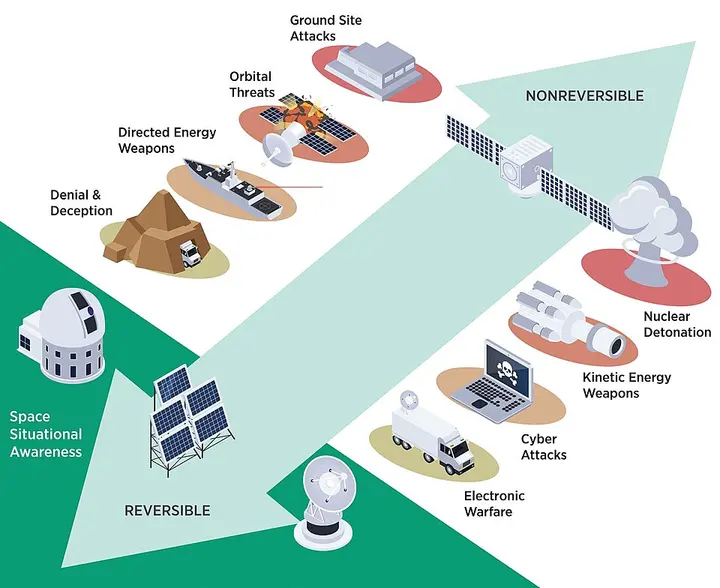
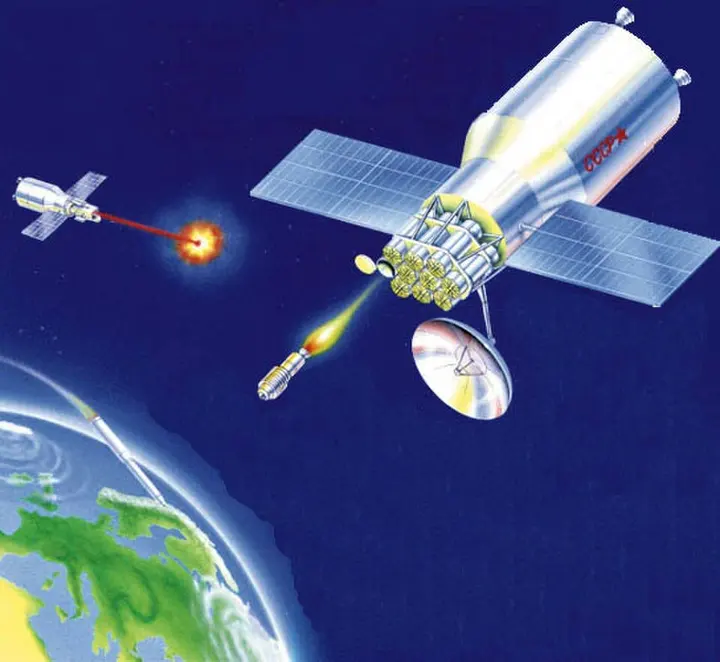
Attacks in space can be primarily divided into three categories: ground-to-space, space-to-space, and space-to-ground. Russia's recent movements fall into the space-to-space category, where one satellite attacks another. For this, 'co-orbital weapons' are used, which remain in the same orbit as the target satellite to approach it and can destroy it through physical collision or weapons such as lasers.
To understand how this process works, let us take a simple example. Suppose two cars are traveling on a highway. One car is a commercial satellite quietly performing its task, while the other is a military satellite. The military satellite gradually changes its speed and direction to come right behind or beside the commercial car. In this position, it can turn at any moment to collide with the other car or spray black paint on its glass to blind it. In space, this same task is performed with extreme precision.
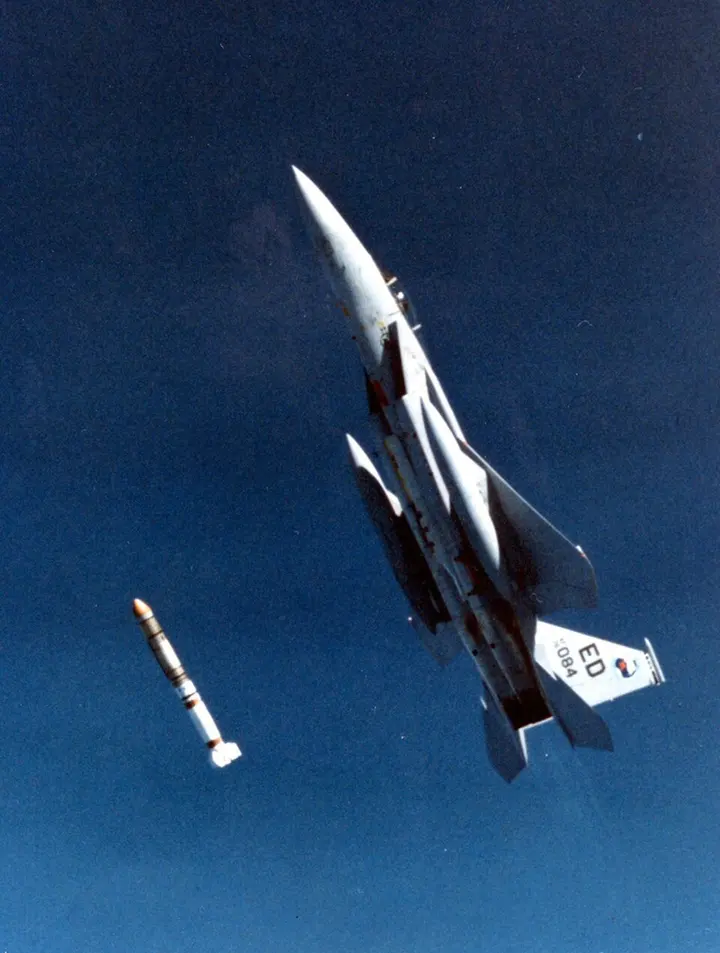
Historically, four countries have successfully tested anti-satellite missiles: the United States, Russia, China, and India. In 2019, under 'Mission Shakti,' India proved its capability by destroying a satellite in low Earth orbit. In 2021, Russia conducted a similar test using the A-235 missile. However, destroying a satellite with a missile creates thousands of pieces of space debris, which becomes hazardous for other satellites. This is why countries are now turning toward 'soft kill' methods, in which a satellite is neutralized rather than destroyed.
- Launch and InjectionThe attacker satellite is launched into the same orbit as the target satellite.
- RendezvousUsing its own engines, the attacker satellite slowly approaches the target.
- Proximity OperationsRemaining a few meters away from the target, its vulnerabilities are inspected or espionage is carried out.
- ExecutionThe target satellite is disabled through physical collision, laser beam, or electronic jamming.
The United States has also taken major steps in this direction. In September 2026, U.S. Space Force Secretary Troy Meink announced that the United States had deployed 'on-orbit space control weapons.' These weapons are capable of providing protection against aggressive satellites from enemy nations. This means that now, not only surveillance but also active defense and offensive preparations have been completed in space.
Why is this news important for the general public? Today, our banking systems, GPS navigation, weather forecasting, and internet services are largely dependent on satellites. If countries like Russia begin to target commercial satellites, global communication systems could be disrupted. Russia is particularly displeased with the role that satellites like Starlink have played in the Ukraine war, and it has previously threatened to shoot down such satellites.
This is also a matter of concern for India. India possesses several of its own critical commercial and military satellites. If such instability in space increases, India will also have to enhance its 'space situational awareness'—that is, its ability to track the location of objects in space. Currently, it is difficult to obtain precise information about what a particular country's satellite is doing in space, as most nations keep their military activities secret.

In the future, there will be a need for changes in space laws. Existing laws emphasize the peaceful use of space, but Russia's recent movements indicate that these regulations are no longer sufficient. Can a military satellite from one country get this close to another country's commercial satellite? Should this be considered the start of a war? These are questions to which the international community must find answers as soon as possible. If this does not happen, wars on Earth will now be fought in space as well, a cost that all of humanity may have to pay.