The Fiber Optics Marvel Driving Global Internet by Trapping Light in Thin Glass Filaments
An in-depth chronicle of how ultra-fine glass threads laid across ocean floors and beneath city streets carry the world's data based on the principle of total internal reflection.
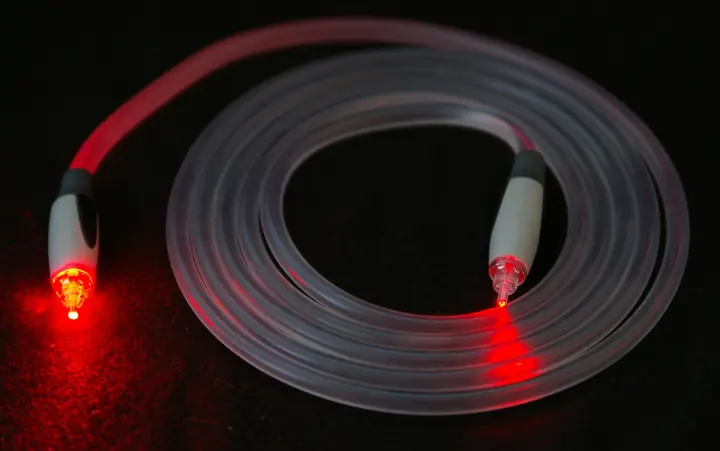
In today's digital age, when we stream videos from a server at the other end of the world with a single click or send messages in a thousandth of a second, all this data is actually flowing not from the sky, but through ultra-thin glass fibers laid deep within the earth and on the ocean floors. This technology is known as the optical fiber. The science of carrying information in the form of light through extremely flexible filaments of glass or plastic instead of metal wires is called fiber optics. The naming of this field was done by the Indian-born physicist Narinder Singh Kapany, who is considered the father of this technology.
Fiber cables have proven to be superior to traditional metal copper wires because light signals can travel over long distances without any major obstruction and with extremely high bandwidth (bandwidth: data carrying capacity). The electric current flowing in a copper wire is affected by external magnetic fields, whereas optical fibers are completely secure against electromagnetic interference (electromagnetic interference: electric-magnetic disturbance). Consequently, there is no disruption in voice or data, and the signal degradation rate, that is, attenuation, also remains very low.
Total Internal Reflection: The Physical Principle of Trapping Light in Glass
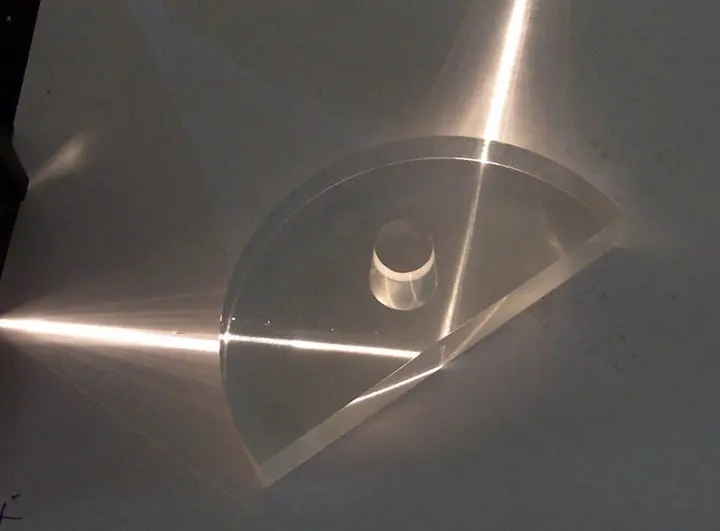
The working mechanism of an optical fiber rests on a fundamental law of physics known as total internal reflection - TIR. Normally, when a ray of light enters from one transparent medium into another, it bends slightly from its straight path, which is called refraction. How fast the light will bend depends on the refractive index of that medium. When light goes from a medium with a higher refractive index to a medium with a lower refractive index, the refracted ray moves away from the normal.

In this process, as the angle of incidence is increased, a specific point arrives where the refracted ray flows parallel to the surface of both media, that is, at an angle of 90 degrees. This special angle is called the critical angle. If the value of the angle of incidence is increased even slightly beyond this critical angle, instead of passing into the second medium, the light ray is completely reflected back inwards into the original medium. In other words, one hundred percent reflection takes place without even the slightest loss of light.
| Medium | Critical Angle (in degrees) |
|---|---|
| Water | 48°27′ (approx. 48.6°) |
| Common / Acrylic Glass | Approx. 41.8° - 42° |
| Flint Glass | 38°41′ |
| Diamond | 23°42′ |
In the year 1823, a detailed mathematical analysis of the phase changes of this phenomenon was presented by the French physicist Augustin-Jean Fresnel, which provided strong support to the wave theory of light. The critical angle for light passing from water into air is approximately 48.6° (or 48°27′), whereas for passing from ordinary glass into air this angle is around 41.8° or 42°. Optical fibres cleverly utilize this same law of nature, so that a ray of light entering inside the glass repeatedly bounces off the inner walls and continues to travel forward for thousands of kilometres without escaping.
The historical journey of guiding light
That light can be bent along a curved path instead of just a straight line was first demonstrated by scientists named Daniel Colladon and Jacques Babinet in Paris in the early 1840s by guiding light through a flowing jet of water. Twelve years later in London, a scientist named John Tyndall demonstrated this experiment in a public lecture and in 1870 clarified the laws of the critical angle and internal reflection in his book. In the late nineteenth century, physicians in Vienna began efforts to deliver light using bent glass tubes to view internal organs of the body.
In the first half of the twentieth century, researchers such as Clarence Hansell and John Logie Baird experimented with transmitting images through thin tubes, but the true revolution came in 1953. Dutch scientist Bram van Heel and, at Imperial College London, Narinder Singh Kapany and Harold Hopkins succeeded in transmitting images by bundling thousands of glass filaments together. Kapany popularized the term "fibre optics" worldwide by writing an article in the 'Scientific American' magazine in 1960 and authored the first definitive book on this field.
The communication revolution and Kao's Nobel-winning discovery
Early optical fibres had a major limitation: light was absorbed within just a few metres. In 1965, a German scientist named Manfred Börner built the first data transmission system at Telefunken Labs. However, to make optical fibres a world-spanning communication medium, reducing the rate of signal attenuation was indispensable. In 1965, scientists Charles K. Kao and George A. Hockham of the British company Standard Telephones and Cables (STC) put forward the revolutionary idea that the attenuation of light in fibres is caused not by physical scattering but by impurities in the glass.
He calculated and demonstrated that if ultra-pure silica glass is used, attenuation can be brought below 20 decibels per kilometer (dB/km), which was a practical milestone for telecommunications. For this historical achievement, Charles K. Kao was awarded the Nobel Prize in Physics in 2009. In 1970, scientists Robert D. Maurer, Donald Keck, Peter C. Schultz, and Frank Zimar of the American glass manufacturer Corning Glass Works prepared a fiber with a capacity of 17 dB/km by adding titanium to silica glass.
dB/km
Subsequently, through the use of germanium dioxide, attenuation dropped to just 4 dB/km. Initially, high-quality glass strands could be drawn at a speed of only two meters per second. However, in 1983, chemical engineer Thomas Mensah increased the production speed at Corning to over 50 meters per second, making fiber cables cheaper than copper wires. In 1977, the first metropolitan fiber cable was laid in the Italian city of Turin.
Internal Structure and Types of Optical Fiber
The physical structure of an optical fiber is an extremely skilled engineering feat. It is primarily a cylindrical structure made of two main layers. The central part is called the core, which is made of ultra-pure silica glass or plastic and has a comparatively high refractive index. Around this core, another transparent layer is coated, which is called cladding. The refractive index of the cladding is kept lower than that of the core. It is precisely due to the difference in the refractive indices of these two layers that light bounces off the wall of the core and remains confined inside.
- 1. Conversion of electrical signals to lightComputer's digital binary data is converted into ultra-fast pulses of light by a laser or LED transmitter.
- 2. Propagation via total internal reflectionLight enters the silica glass core and continuously advances by bouncing off the cladding walls at an angle greater than the critical angle.
- 3. Optical amplificationSignals weakened over long distances are directly reinforced optically without conversion to electricity using amplifiers like EDFA.
- 4. Detection and reconversionThe optical receiver at the receiving end captures the light signals, converts them back into the original digital electrical data, and delivers it to the device.
Based on the method of signal transmission, optical fibers are mainly divided into two classes: Single-mode fiber (SMF) and Multi-mode fiber (MMF). In multi-mode fiber, the diameter of the core is large, due to which light rays can pass through more than one path (modes). It is mainly used for short-distance networking and transmitting high power. On the other hand, in single-mode fiber, the core is extremely thin, so that light travels along only a single straight path. Single-mode fiber is used in all communication networks longer than 1,050 meters.
Conversion of Data into Billions of Bits via Light
Transmission of information in optical fibers is not merely a flash, but a well-organized digital process. Electrical data emerging from a computer or phone first goes to a transmitter, where a laser or LED diode converts that information into microscopic pulses of light. Light turning on represents '1' and turning off represents '0' - this binary code is hurled inside the fiber at extreme speed. In currently operational systems, a typical data rate of 10 to 40 gigabits per second (Gbit/s) is available.

To push this capacity to an extraordinary level, the Wavelength-Division Multiplexing (WDM) method is used. In this method, rays of light having different wavelengths (colors) are caused to flow simultaneously through a single glass strand. By the year 2008, about 80 independent channels were run simultaneously in commercial dense WDM systems. To prevent the signal from weakening over long distances, David N. Payne of the University of Southampton and Emmanuel Desurvire of Bell Labs developed the Erbium-doped fiber amplifier (EDFA) in 1986 and 1987 respectively. This device directly boosts the optical signal optically without converting it to electricity, so that repeaters can be easily placed every 70 to 150 kilometers.
The process of joining the ends of two fibers is also not as simple as joining electrical wires. They must be cut with extreme precision, which is called cleaving. For a permanent connection, the fusion splicing method is used, in which both ends are melted by the heat of an electric arc and fused into one. For a temporary connection, mechanical splices or special optical connectors are used, such as TOSLINK connectors used in home audio equipment.
New Frontiers Beyond Communication: From Sensors to the Battlefield
Optical fiber is not limited only to telephone or internet. In the medical field, live inspection of delicate internal parts of the body has been made possible through fiberscope and endoscopy instruments. In daylighting technology, parabolic collectors are installed on the roof of a building to collect sunlight and route it through coils of fiber into dark rooms inside the building.
Furthermore, fiber is also used as a sensitive sensor. By measuring the changes that occur in the amplitude, phase, or wavelength of light due to changes in temperature, pressure, or strain, the structural safety of major bridges, dams, and tunnels is inspected, which is called distributed acoustic sensing. Since March 2024, the Russia-Ukraine war has seen the use of drones connected with optical fiber. Since an ultra-fine fiber wire remains connected to the back of these drones, they can execute precise strikes on the enemy without being affected by any electronic jamming or electromagnetic interference.
In 1991, the new concept of photonic crystal fiber emerged, which became commercially available in the year 2000. These fibers use the principle of diffraction instead of total internal reflection, and their inner core can also be hollow. Running at the speed of light, these invisible glass fibers have transcended geographical boundaries to seamlessly connect human civilization together.