Invisible War in the Skies: The Science of Anti-Jamming Antenna Technology Protecting Drones
In the Russia-Ukraine conflict, the use of large, powerful anti-jamming antennas is increasing to counter electronic attacks that neutralize drones.
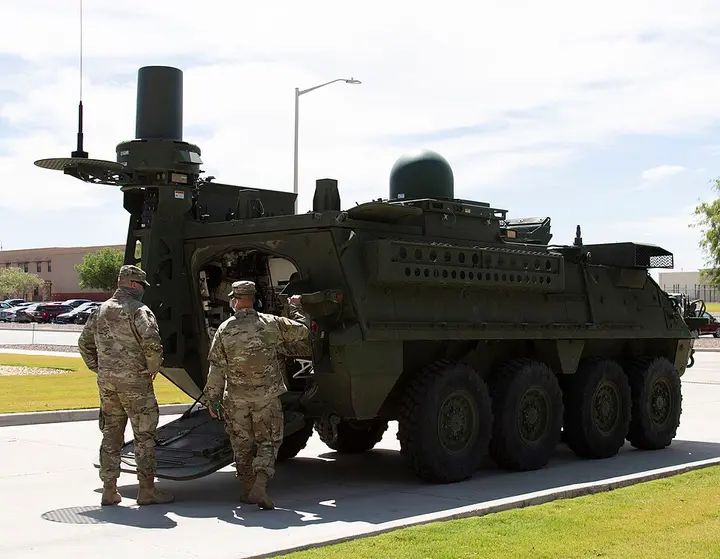
The modern battlefield is no longer limited to land, sea, or air; it has expanded into the invisible realm of the electromagnetic spectrum. In the ongoing conflict between Russia and Ukraine, drones have proven to be a decisive weapon, but electronic jamming is now being used more than bullets to shoot them down. According to company announcements and recent reports, Russia is equipping its drone fleet with large anti-jamming antennas to strengthen them. These antennas help drones receive satellite navigation signals and neutralize electronic interference conducted by the enemy.
Electronic warfare or electromagnetic warfare is a military strategy that utilizes electromagnetic energy to disrupt enemy operations. The primary objective of this technology is to prevent the enemy from exploiting the spectrum while ensuring its unobstructed use for one's own forces. Electronic warfare can be conducted from anywhere—air, sea, land, or space. It can target communication systems, radar, and other military assets. In today's era, the information environment has become more complex, which is referred to in military terminology as the electromagnetic environment.
| Division name | Main purpose | Example |
|---|---|---|
| Electronic Attack (EA) | To destroy or weaken enemy signals | Radio and radar jamming |
| Electronic Protection (EP) | To protect own equipment from jamming | Anti-jamming antenna, flares |
| Electronic Support (ES) | To detect and identify enemy signals | Signals Intelligence (SIGINT) |
| Division | Main function |
|---|---|
| Electronic Attack (Electronic Attack) | To jam or render enemy equipment useless. |
| Electronic Protection (Electronic Protection) | To protect one's own equipment from enemy attacks. |
| Electronic Warfare Support (Electronic Warfare Support) | To detect enemy waves and determine their location. |
Electronic warfare can be divided into three main parts: electronic attack, electronic protection, and electronic warfare support. Electronic attack refers to the aggressive use of energy to render enemy equipment ineffective, which is commonly known as jamming. Meanwhile, electronic protection is a method of defending against such enemy attacks. Anti-jamming antennas are a part of electronic protection. The third part, electronic support, is used to detect, identify, and locate waves emitted by the enemy.
When a drone is flying in the sky, it relies on satellite signals like GPS for its location. During jamming, the enemy sends a very powerful radio signal on the same frequency, causing the drone's original signal to be lost. This situation is akin to two people talking in a quiet room when someone suddenly turns on a loud speaker, making the original voice impossible to hear. The new, large anti-jamming antennas used by Russia have the ability to filter out this additional noise. They accept only the specific signals coming from satellites and block the remaining jamming signals.

- Signal filteringThe antenna separates only the specific satellite signal from all the radio noise in the sky.
- Jamming blockingThe antenna rejects unnecessary and powerful jamming waves sent by the enemy.
- Stable navigationDue to the filtered pure signal, the drone maintains its correct path and location.
The history of electronic warfare is quite old. Its first documented use occurred during the Second Boer War of 1899-1902. The British Army used searchlights to transmit Morse code signals over clouds, which the Boers attempted to jam using their own searchlights. Winston Churchill described this incident in his book. Subsequently, attempts at radio jamming were also made during the Russo-Japanese War of 1904-1905. A Russian radio operator used his spark-gap transmitter to disrupt communication between Japanese warships, which forced the Japanese forces to retreat.
In modern times, Israel Aerospace Industries has developed a new system called 'Scorpius'. Announced in November 2021, this system can simultaneously disrupt the radar and communication of multiple ships, drones, and missiles. Recently, on September 8, 2024, Russian drones entered the airspace of Romania and Latvia. It has been noted that due to Ukraine's electronic warfare, several of Russia's 'Shahed' drones and 'Kh-58' missiles failed to reach their targets. This demonstrates how effective jamming technology is becoming and how essential it is to obtain protection against it.
- Signal receptionThe antenna captures all radio waves and satellite signals around it.
- Identification of jammingThe system determines which waves are genuine and which are useless noise sent by the enemy.
- Filtering and nullificationUsing special algorithms, the jamming signal is blocked or its effect is nullified.
- Use of pure dataOnly the correct navigation signal is sent to the drone's computer so it does not lose its way.
Anti-jamming antennas are not only large in size, but their internal structure is also complex. They use spread spectrum technology, which spreads the signal over a wide bandwidth, making it difficult to jam. In addition, low observability or stealth technology is also used so that the drone itself is not detected by enemy radar. According to 2007 NATO documents, the electromagnetic spectrum is now viewed as a distinct theater of warfare, just like land or air domains.
For ordinary citizens, this technology might seem like a distant matter, but the mobile networks and Wi-Fi used in our daily lives work on these same principles. If anti-jamming technology develops in the military sector, civilian communication systems will also become more secure in the future. For a country like India, which is facing drone infiltrations at its borders, developing and understanding such technology is extremely vital. This invisible war fought in the skies will determine in the coming times which country is more capable in terms of technology.