India's New Hypersonic Power: DRDO Missile to Target Enemy Ships 3,500 km Away
The Defence Research and Development Organisation (DRDO) is strengthening India's dominance in the Indian Ocean by extending the range of its long-range anti-ship hypersonic missile.
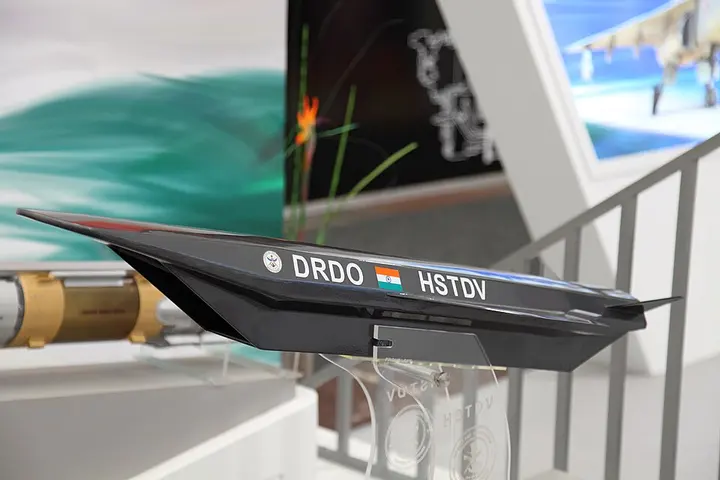
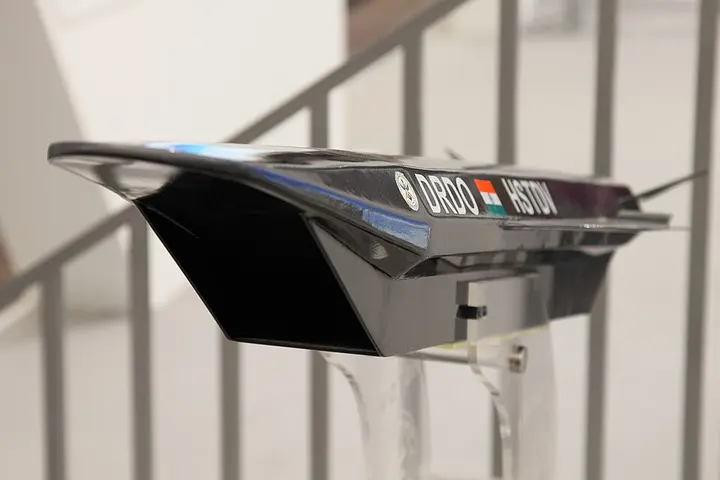
A new chapter is about to be added to India's defense capabilities. The Defence Research and Development Organisation (DRDO) is preparing to significantly enhance the capabilities of India's indigenous Long-Range Anti-Ship Hypersonic Missile (LR-ASHM). This missile has already proven a strike range of 1,500 kilometers, but scientists are now working toward extending it to 3,500 kilometers. This development is strategically vital for India, as it will help curb the naval movements of neighboring countries like China and Pakistan in the Indian Ocean region.
A hypersonic missile is one that can fly at five times the speed of sound or faster. In scientific terms, this speed is referred to as 'Mach 5'. This new DRDO missile is not only fast but also possesses the ability to change its trajectory mid-flight. This feature makes it nearly invincible to enemy radar and missile defense systems. According to company announcements and media reports, the missile could enter the production phase by 2028-29, following the next two to three tests.
The history of DRDO is intertwined with India's self-reliance. Established in 1958, this organization today operates a network of 52 laboratories. In its early years, India laid the foundation through missile programs such as 'Project Indigo' and 'Project Devil'. Today, under the DRDO 2.0 strategy, India is moving beyond conventional weaponry to focus on artificial intelligence and hypersonic technology. The LR-ASHM is an excellent example of these new-generation weapons, which will place India among a select few countries in the world.
Boost-Glide Technology: How does this missile work?
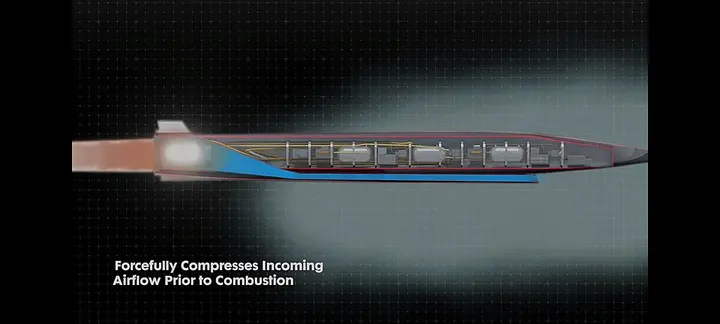
The LR-ASHM is a 'boost-glide' hypersonic missile. In this technology, the missile is initially sent to the upper layers of the atmosphere by a powerful rocket booster. Once the required altitude and speed are achieved, the upper part of the missile, known as the 'Hypersonic Glide Vehicle' (HGV), separates. This part glides at extreme speeds using aerodynamic lift even without an engine and proceeds toward the target.
| Detail | Parameter |
|---|---|
| Maximum speed | 12,348 km/h (approx. Mach 10) |
| Average speed | 6,174 km/h (Mach 5) |
| New range | 3,500 kilometers |
| Technology | Boost-glide hypersonic |
| Booster engine | K-4 solid fuel rocket |
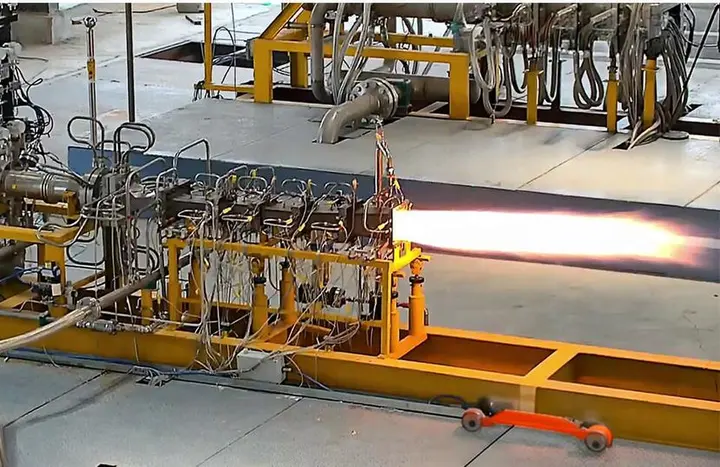
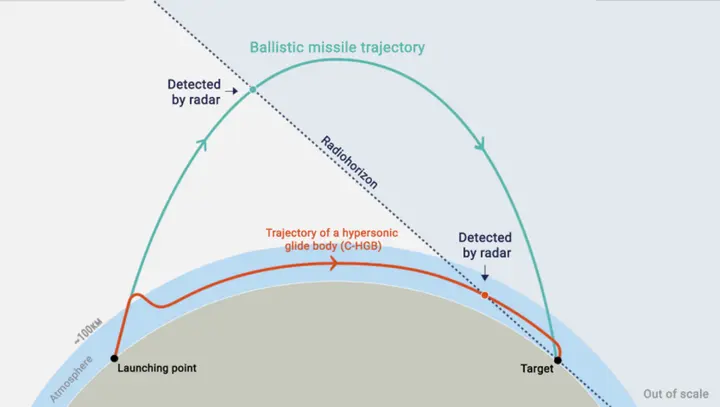
This process is different from that of a ballistic missile. A ballistic missile travels into space and descends along a fixed parabolic path, which an enemy can predict. However, a hypersonic glide vehicle remains within the atmosphere and can move in a serpentine or zig-zag pattern. This is called 'maneuverability'. Consequently, while enemy radar may be able to track it, it cannot accurately calculate where it will strike.
- Launch and boostSolid rocket booster takes the missile to the upper atmosphere at extreme speed.
- SeparationAfter reaching the required altitude, the glide vehicle separates from the booster.
- Hypersonic glideThe missile re-enters the atmosphere and glides at Mach 5+ speed using aerodynamic lift.
- ManeuveringWhile moving towards the target, the missile changes its path to evade radar.
- Precision strikeIn the final phase with the help of sensors, it strikes the enemy's moving ship.
When an object travels through the air at five to ten times the speed of sound, the air surrounding it becomes extremely hot. This heat is so intense that air molecules break down and the gas turns into 'plasma'. Plasma is the fourth state of matter, which can conduct electricity. This plasma layer creates a shield-like barrier around the missile, which can sometimes disrupt communications, but it also helps conceal the missile from radar.
Technical Details and Speed Statistics
The speed of the LR-ASHM is truly astonishing. According to reports, its maximum speed can reach up to 12,348 kilometers per hour. Its average speed hovers around 6,174 kilometers per hour. At such a velocity, this missile can cover thousands of kilometers in minutes. For the booster stage of this missile, the technology of India's renowned K-4 Submarine-Launched Ballistic Missile (SLBM) has been utilized. Since the K-4 itself has a range of 3,500 kilometers, no major hardware modifications are required to increase the range of the LR-ASHM.
To increase the range, primarily software upgrades and a new 'trajectory profile'—meaning modifications to the flight path—will be implemented. The missile is equipped with indigenous sensors that can accurately detect moving ships even during the terminal phase, which is the final stage of the attack. In addition to stationary targets, this missile can also target large warships like aircraft carriers moving in the sea.
On a global scale, only countries like Russia, China, and America are advanced in hypersonic technology. Russia has reportedly used missiles like its 'Zircon' in the Ukraine war. China possesses hypersonic missiles like the DF-17. India's missile with a 3,500 km range will pose a direct challenge to China's maritime dominance. Together with supersonic missiles like the BrahMos, it will provide India with a multi-layered security shield.
Strategic Significance: India's Shield in the Indian Ocean
Acquiring a range of 3,500 kilometers will dramatically enhance India's 'maritime denial' capability. This means India will be able to prevent enemy warships or aircraft carrier groups from entering thousands of kilometers away from its shores. India's strategic grip on the Indian Ocean region will be strengthened. DRDO has also proposed this system for the army and the air force, which means in the future, this missile will be able to target ground-based objectives as well.
Successful tests of this missile were conducted in 2023 and 2024, during which precise targets were hit at a range of 1,500 km. A significant test was also successful in May 2026. Now, as India moves towards a range of 3,500 km, it will become a major example of an 'Atmanirbhar Bharat' (self-reliant India) in the defense sector. This missile is not just a weapon, but a symbol of India's scientific progress and its firm resolve to maintain regional security.
However, there are still many challenges in the development of hypersonic weapons. Developing materials that can withstand extreme heat and communication systems that can function even within a plasma shield remains a subject of continuous research for scientists. According to DRDO sources, the tests to be conducted in the coming years will further strengthen all these aspects. By 2028, when this missile is inducted into the Indian Army's arsenal, it will permanently alter the security equations of South Asia.