Self-Reliant Skies: The Indian Air Force's Indigenous Fighter Jet Roadmap with Tejas and AMCA
The new Air Force Chief has prioritized the Tejas and the 5th-generation AMCA project, emphasizing the expansion of fighter squadrons and indigenous technology.

The Indian Air Force is currently on the verge of a historic transformation. Upon assuming office, the new Chief of the Air Staff, Air Chief Marshal Ashutosh Dixit, presented a clear and robust roadmap for the nation's aerial security. According to a report by the Times of India, the top priorities of the new Air Force Chief include increasing the number of fighter squadrons—groups of aircraft—and accelerating indigenous aircraft projects. At the center of this strategy are two key aircraft: the HAL Tejas and the fifth-generation Advanced Medium Combat Aircraft (AMCA).
The history of the Indian Air Force has been glorious. According to Wikipedia data, it was established on October 8, 1932, in British India as an auxiliary air force. On April 1, 1933, the Air Force commissioned its first squadron, which consisted of only 4 Westland Wapiti biplanes and 5 Indian pilots. Today, as of January 1, 2025, there are 135,000 personnel serving in the Air Force. To keep such a large military force modern, it has become imperative to reduce foreign dependency and adopt indigenous technology. Air Chief Marshal Dixit has emphasized that the Tejas and AMCA projects are crucial not only for enhancing defense capabilities but also for making India self-reliant in defense production.
સંખ્યા
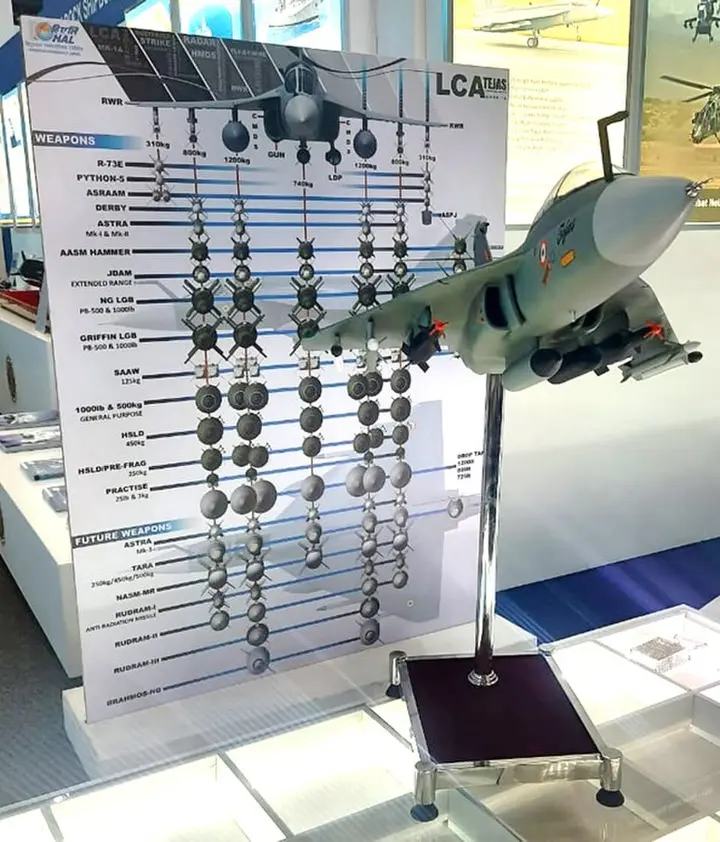
The HAL Tejas is India's first indigenous Light Combat Aircraft (LCA). It is a lightweight, multi-role fighter aircraft that possesses the capability to attack ground targets in addition to engaging in aerial combat with enemy aircraft. The design of the Tejas has been developed in such a way that it can operate effectively from the high mountains of the Himalayas to the hot environments of the desert. This aircraft is equipped with state-of-the-art avionics—electronic equipment used in aircraft—and radar systems. According to the Air Force's roadmap, various models of the Tejas, such as the Mk-1A and the future Mk-2, will replace aging aircraft.
| Year | Event/Detail |
|---|---|
| 1932 | Official establishment of the Air Force on 8 October |
| 1933 | Formation of the first squadron (with 4 aircraft) |
| 1945 | The word 'Royal' was added by King George VI |
| 1950 | The word 'Royal' was removed as India became a Republic |
| 2025 | Modern force with 1,35,000 active personnel |
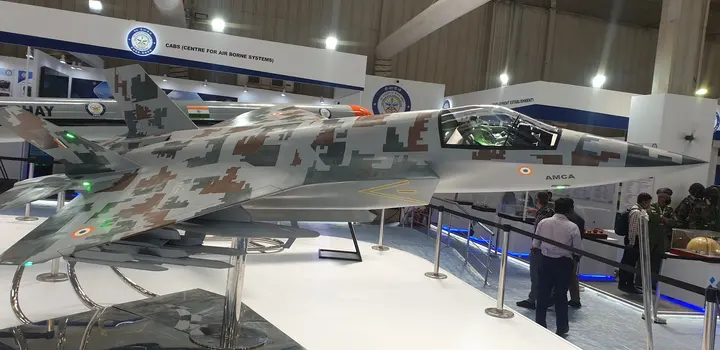
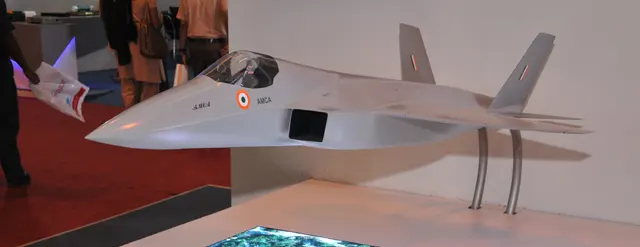
When we talk about the future, the AMCA, or Advanced Medium Combat Aircraft, becomes the most significant factor. It is a fifth-generation fighter jet. The most notable feature of a fifth-generation aircraft is its stealth technology. Stealth refers to the ability to evade radar. The surface and shape of this aircraft are designed to scatter radar waves rather than reflect them, making the aircraft invisible to enemy radar. Air Chief Marshal Dixit has given this project top priority because it will place India in the ranks of countries like the United States, Russia, and China.
- Concept and DesignThe shape and capabilities of the aircraft are determined according to the requirements of the Air Force.
- Prototype ConstructionInitial models of the aircraft are prepared for testing.
- Ground and Flight TestingThe aircraft is tested on the ground and in the air under various conditions.
- Serial ProductionAfter successful tests, large-scale production begins by organizations like HAL.
- Induction into Air ForceReady aircraft are inducted into squadrons and put on operational duty.
The AMCA will feature not only stealth but also supercruise capability. Typically, aircraft require the use of additional fuel known as afterburners to fly faster than the speed of sound, which generates significant noise and heat. Supercruise capability refers to the ability to fly at supersonic speeds for extended periods without the use of afterburners. This increases the aircraft's range and makes it difficult for the enemy to detect. The aircraft will also incorporate artificial intelligence (AI)-based systems to assist the pilot in making rapid decisions on the battlefield.
The Air Force's roadmap places special emphasis on increasing squadron strength, or the number of combat units. According to historical records from Wikipedia, India had 10 operational squadrons at the time of independence in 1947, three of which were given to Pakistan. While this number grew over time, the number of squadrons has currently decreased due to the retirement of many older aircraft. According to Air Chief Marshal Dixit, this void will be filled through the large-scale production of Tejas and the development of the AMCA. To achieve this, there is a plan to increase production capacity in collaboration with Hindustan Aeronautics Limited (HAL) and other private partners.
The process of developing an indigenous fighter jet is highly complex. It is not merely a task of assembling an engine and wings, but involves the integration of thousands of sensors, software code, and advanced alloys. In the case of Tejas, India has developed fly-by-wire technology, where the aircraft's controls operate via electronic signals. This makes the aircraft more agile. In the AMCA, this technology will be further advanced to include sensor fusion. Sensor fusion means combining information received from all of the aircraft's sensors to provide the pilot with a clear picture of the surrounding situation.
The Indian Air Force plays a vital role not only in times of war but also during peacetime. According to Wikipedia, the Air Force has conducted rescue operations during natural disasters such as the 1998 cyclone, the 2004 tsunami, and the 2013 floods. The role of the Air Force has been decisive in military operations such as Operation Vijay (liberation of Goa) and Operation Meghdoot (Siachen). It is essential to have modern and indigenous aircraft for all these operations so that there is no reliance on other countries for foreign spare parts or technology during times of crisis.
Ultimately, the roadmap for Tejas and AMCA is not merely a military necessity, but a symbol of India's scientific progress. The way the Air Force, under the leadership of Air Chief Marshal Dixit, is prioritizing indigenous technology will ensure that India's aerial borders become more secure in the coming decade. However, maintaining timelines and managing the budget will remain major challenges in the implementation of this roadmap. Nevertheless, these fighter jets, developed under 'Make in India' through the synergy between Indian engineers and the Air Force, will demonstrate India's power on the global stage.