Pocket-Sized Receiver: Ukraine's New SDR Technology Live-Hacks Russian Drone Camera Feeds
Ukraine's CODE380 has developed the 'D·Vision SDR', a compact receiver weighing just 290 grams that intercepts enemy drone video signals in real-time to prevent battlefield espionage.

Digital Espionage on the Battlefield: What has happened and why is it important?
In the war between Russia and Ukraine, the use of drone technology has reached an unprecedented level. In this modern warfare, the biggest question now is: where is the enemy drone going and what is it seeing? CODE380, a communication equipment manufacturing company based in Kyiv, has found a small but highly effective solution to this question. They have developed a pocket-sized small radio receiver named 'D·Vision SDR'.
This small device intercepts live video feeds transmitted from Russian unmanned systems, i.e., drones, mid-stream. For drone operators, the biggest challenge is to reduce the weight of their kit in the battlefield. The D·Vision SDR receiver adds very little weight to the operator's gear, allowing soldiers to easily carry it with them.
With the help of this receiver, Ukrainian drone teams can spy on enemy drones that are monitoring them. Ukrainian soldiers can see live on their screens which direction the enemy drone is moving and what its pilot is targeting before an attack.
The Science of Video Signal Interception: How does SDR technology work?
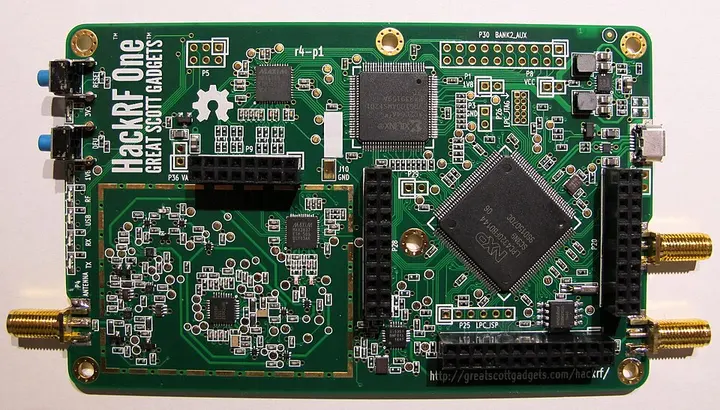
At the heart of this technology lies Software-Defined Radio or SDR technology. In traditional radio receivers, hardware circuits are used to tune frequencies, whereas in SDR, this entire task is performed through software coding. Because of this, when new types of drones or new specifications emerge, the device can be made capable of recognizing new signals simply by updating the software instead of changing the hardware.
To understand this, let's take a simple example: just as you might listen to the radio in an open area and tune into different stations, this device continuously scans the radio frequency spectrum moving through the air. This device scans across a vast frequency range from 500 megahertz to 8.7 gigahertz without any blind spots.
When a Russian drone transmits analog video from its camera to the control station below, those signals are not secure or encrypted. The D·Vision SDR intercepts these signals and immediately converts them into video. In an interview given to the Ukrainian tech outlet DOU on October 17, the developers stated that this receiver possesses much higher sensitivity compared to other competing detectors.
- 1. Frequency scanningThe SDR receiver continuously scans radio waves traveling in the air across a wide bandwidth of 500 MHz to 8.7 GHz.
- 2. Capturing un-encrypted signalsCaptures analog video signals transmitted by enemy drones without any blind spots.
- 3. Conversion to videoRadio frequency data is immediately converted into a live video feed by digital software.
- 4. Display on screenThe Ukrainian operator can see the enemy drone's location and its target live on their screen.
Weight, Capacity, and Frequency Spectrum: A comparison of statistics
According to manufacturer data published in Militarnyi, the D·Vision SDR receiver can display analog video at distances of up to 6 miles (10 kilometers) on frequencies between 540 MHz and 6 GHz. At higher frequencies than this, the range remains at approximately 2 to 3 miles (3.5 to 5 kilometers).
The size and weight of this receiver is its greatest advantage. The D·Vision SDR weighs only 10 ounces, or approximately 290 grams. Compared to its main competing devices made in Ukraine, this weight is less than half. For example, the Vydun 7.5 receiver from the company Babai weighs approximately 2 pounds (0.9 kilograms) and can intercept video up to 7.5 GHz. The SENSE-4 device from the Contra-drone company weighs 21 ounces (600 grams) and reaches up to 8.2 GHz. Meanwhile, BlueBird Tech's Chuyka 3.0 device weighs up to 23 ounces (650 grams), which can now be upgraded to 8.8 GHz.

From June 2026, Russia's 'Molniya' strike drone began transmitting video on the 4.1 to 4.5 GHz band. According to Serhii "Flash" Beskrestnov, a radio expert and advisor to the President of Ukraine, most older detectors cannot see this frequency or see it very weakly. The D·Vision SDR's coverage area completely covers this frequency band. In June, Beskrestnov warned, "If you place your faith in detectors, it could prove fatal."
| Detail | Capacity / Figures |
|---|---|
| Weight | 290 grams (10 oz) |
| Frequency scan range | 500 MHz to 8.7 GHz |
| Analog video range (540 MHz - 6 GHz) | 6 miles (10 km) |
| Analog video range (high frequency) | 2 to 3 miles (3.5 to 5 km) |
| Molniya drone band coverage | 4.1 to 4.5 GHz |
Passive Sensors and New War Strategies
This device works as a passive sensor. The importance of passive sensors in military strategy is immense. Active sensors, such as radar, transmit their own signals into the air, allowing the enemy to easily detect their position and attack them. In contrast, a passive sensor merely listens to surrounding radar or radio waves without emitting any type of signal.
Inexpensive and passive sensors like the D·Vision SDR work alongside radar, acoustic sensors, and interceptors rather than replacing them. Soldiers can detect the threat of an enemy drone in advance without revealing their own position.

Future Challenges: The Threat of Digital Video and AI Drones
While this technology is extremely useful, it also has some limitations. Most small receivers are unable to decode digital video. Additionally, the system fails to detect Mavic-compatible signals from more than a few miles away and fails to intercept drones operated by fiber-optic cables, because drones controlled by cables do not emit any radio waves in the air.
According to Serhii Beskrestnov, drone variants are now being designed whose video feeds are very difficult to hack. Russia's Molniya drones are an example of this. According to a report by The New York Times in August, some Molniya drones use Nvidia processor chips to achieve artificial intelligence (AI) based autonomous guidance and they do not emit any radio signals in the air.
Beskrestnov warned in writing, "We will have to be prepared for the time when digital video completely replaces analog." If this happens, portable detectors and fixed analog receiving stations will become ineffective. Therefore, this race of technology in the drone battlefield will continue incessantly.