Hidden Backdoor in TV Set-Top Boxes: How 1.3 Million Devices Became Slaves to a Cyber Army
A Google hardware partner embedded secret malware into Android set-top boxes to build a global botnet, a revelation that has shocked the tech world.

An Invisible Spy in the Living Room
In today's smart era, televisions in our homes are no longer just a medium for entertainment; they have become full-fledged computers connected to the internet. Affordable Android set-top boxes that provide YouTube or OTT streaming on TV screens have reached millions of homes. However, a very serious announcement recently made by technology giant Google has shaken the global cybersecurity system. One of the company's own authorized hardware partners created a backdoor at the manufacturing level in over 1.3 million devices, turning them into an army for cybercriminals.
This was not a case of ordinary hacking or a software bug, but a planned scam deliberately carried out inside the factory. According to a detailed report by The Verge, a company named Videostrong Technology Co., based in the Chinese city of Shenzhen, had installed this malicious code in the devices it manufactured. Following this exposure, Google immediately took strict action against the manufacturer and permanently removed it from its official Android partnership. What an ordinary person considers a box for watching TV had become a powerful tool for cyber mafias to earn illegal money.

What is a botnet and how does it work?
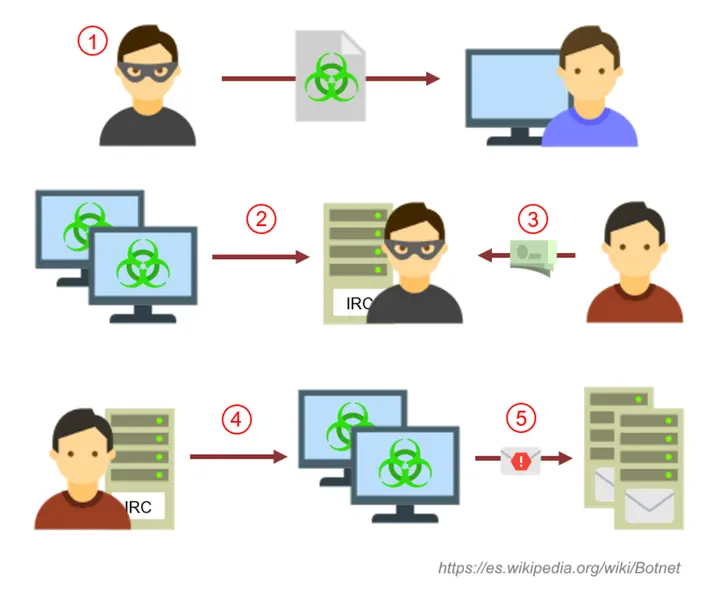
To understand this entire conspiracy, it is essential to understand the concept of a 'botnet'. A botnet is a word formed by combining 'robot' and 'network', which is a group of internet-connected devices over which a third party has gained illegal control. In computer science terminology, such compromised devices are called 'zombie computers'. Everything may look normal to the homeowner on the TV screen, but in the background, the device is following the orders of a cybercriminal sitting in some corner of the world.
For the operation of any botnet, there is a central system called a Command and Control (or C2) server. The main mastermind running this entire network is known as a 'bot herder', who sends commands to thousands or millions of devices simultaneously from their secret server. Typically, cyber attackers infiltrate computers through phishing emails or viruses. But the most terrifying aspect in this case was that the customer had made no mistake; the malware (malicious software) was planted the very moment the device was manufactured.
- Factory-level implantChinese manufacturer inserts a secret backdoor code directly into the device's original software firmware.
- First boot and hidden communicationWhen the customer turns on the device at home, it downloads malware using an 'obfuscation' method.
- Connection with C2 serverMalicious set-top boxes establish contact with the criminals' command and control server.
- Management of illegal activitiesThe device starts working silently for ad fraud, proxy networks, and data theft.
The Videostrong Scam: Planting Malware from the Factory
Details revealed by Google's investigation show that the Shenzhen-based company Videostrong had orchestrated the entire system with extreme cunning. The company used obfuscation (a complex technique to hide or obscure code) in its devices. When a customer bought a new set-top box and turned it on for the first time at home after connecting it to power and Wi-Fi, this hidden code would activate. It would secretly establish contact with an external server and download additional malware modules.
According to Google, this backdoor and botnet were not an accident but were intentionally developed for financial gain. Videostrong leased access to this backdoor to underworld cybercriminals and loaded their malicious modules onto users' devices. These modules were primarily used for three illegal activities: ad fraud, data exfiltration, and joining the device to a residential proxy network to route unauthorized network traffic.
લાખ ઉપકરણો
The Game of Ad Fraud and Residential Proxies
The ad fraud committed by this botnet directly defrauds the multi-billion dollar digital advertising industry. Even when the TV screen is off or the user is just watching a simple channel, the set-top box would automatically click on thousands of online advertisements by opening an invisible web browser in the background. Advertiser companies are led to believe that a real customer is viewing their product, and the money goes into the pockets of these criminals.
On the other hand, a residential proxy network is a direct threat to ordinary internet users. When cybercriminals engage in hacking, spamming, or illegal activities on the dark web from their own computers, there is a risk that their original IP address will be caught. Therefore, they use your home's TV set-top box as a proxy. Consequently, while the cybercrime is committed by a foreign hacker, the investigation agencies' records show your home's internet connection and your IP address as having been used for the crime.
| Aspect | Detail |
|---|---|
| Responsible manufacturer | Videostrong Technology Co. (Shenzhen, China) |
| Range of affected devices | Android TV set-top boxes, telehealth, karaoke, digital signage |
| Main criminal intent | Ad fraud, residential proxy, data theft |
| Directly affected devices | 1.3 million |
| Actions taken by Google | Partnership cancellation, certification ban, C2 domains block |
Not Just Set-Top Boxes, Other Smart Devices Also Affected
Google's investigation also revealed that this fraud was not limited to just one brand or model. This malicious software had been planted directly into many different brands and models for years. Most of the devices were Android TV set-top boxes, but this infection had also spread to many other IoT (Internet of Things) devices. This included telehealth devices used in hospitals and homes, karaoke machines for entertainment, and digital signage boards installed in malls or public places.
Striking back against this entire racket, Google dismantled the primary command-and-control (C2) domains of this infected network known as XCPE. According to the company's assessment, these criminal syndicates possessed not only these set-top boxes but also other diverse distribution channels. As soon as Google shut down the C2 domains, the connection to at least 10 million other infected devices under the control of these criminals was severed.
The Android Ecosystem and the Challenge of Certification
This entire incident also sheds light on the open nature of the Android operating system and its disadvantages. Developed by Google, Android is the world's most popular operating system, with over 4 billion users. Its core open-source version is known as the Android Open Source Project (AOSP), which any hardware manufacturer can download and use for free. However, to use the Google Play Store and Google services, manufacturers must obtain Google's official certification.
Although the Chinese manufacturer Videostrong was a Google-recognized partner, it still managed to deceive the system and insert this backdoor. Following this incident, Google stated that it has severed all ties with the company and has imposed a complete ban on it from manufacturing certified devices or supplying software. Furthermore, to prevent such hardware-level risks in the future, it has made the review process for all device manufacturers much stricter.
Security Lessons for General Consumers
This incident serves as a major red flag for Indian and global consumers. Unbranded or unknown Chinese smart TV boxes are sold indiscriminately at very low prices on online shopping platforms or in local electronics markets. Lured only by cheap prices and free content, consumers purchase such devices and connect them to their home Wi-Fi networks. In reality, however, these devices become an open door for cyber thieves into your secure home network.
Technology experts strongly advise that when buying set-top boxes or smart TVs, one should always choose well-known and reliable brands that are Google-certified. Excessively cheap devices often earn their profits by selling user data and bandwidth. In this era of digital revolution, as convenience increases, cyber vigilance must be cultivated to the same extent; otherwise, a device sitting in your own living room will become a cyber weapon against you.